

Scaling cloud migrations with agentic AI on Amazon Bedrock AgentCore
AWS Professional Services introduces a multi-agent framework to streamline enterprise cloud migrations using Amazon Bedrock AgentCore.
“AWS's multi-agent framework cuts infrastructure as code development time from weeks to minutes, revolutionizing enterprise cloud migrations.”
Key takeaways
- AWS Professional Services has launched a multi-agent framework for cloud migrations.
- The framework automates tasks like discovery and code generation.
- IaC development time is reduced from weeks to minutes.
- Enhanced portfolio governance is a key feature of the new system.
- Early adopter feedback will shape future enhancements to the framework.
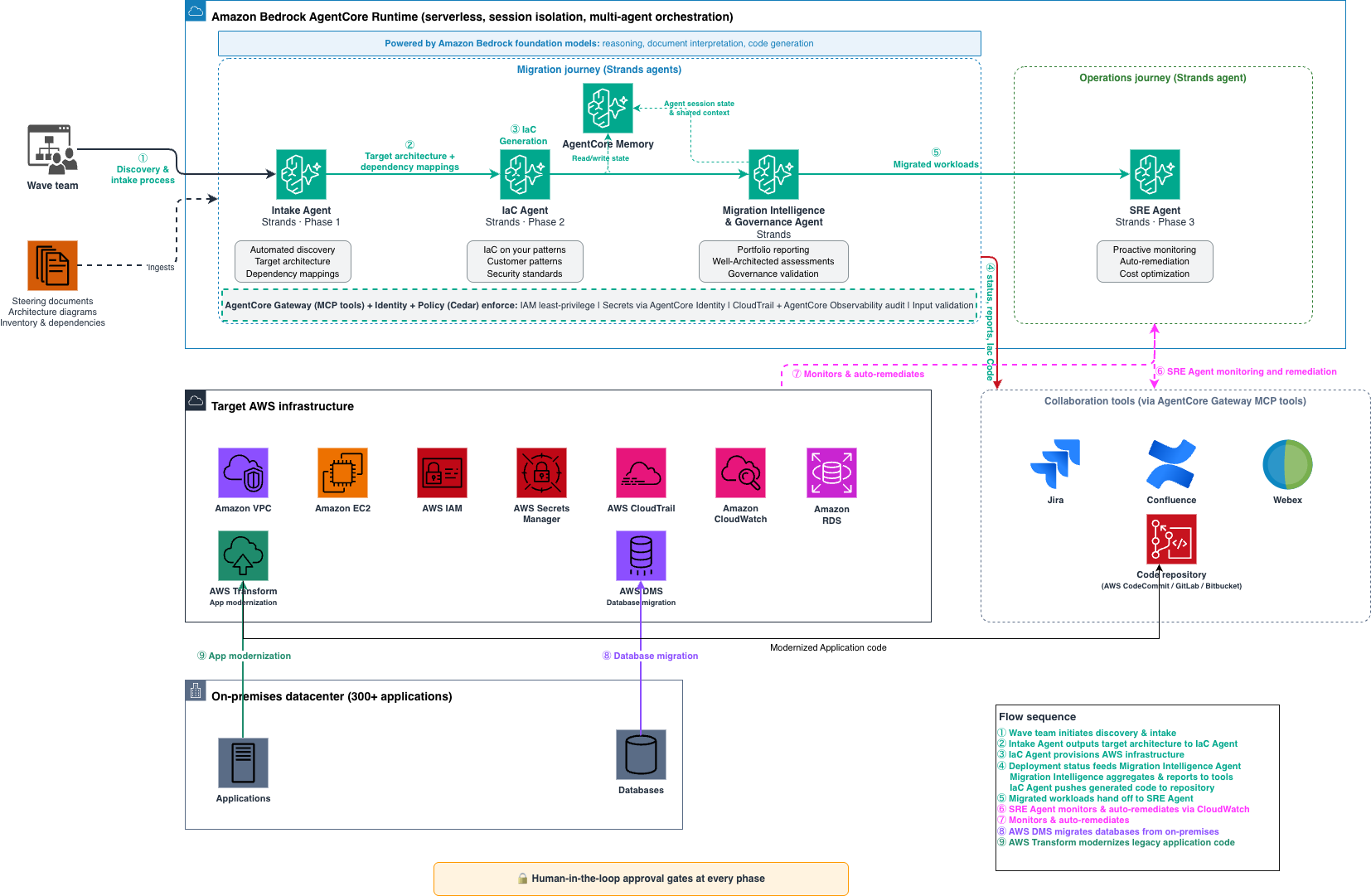
In a transformative move for enterprise cloud migrations, AWS Professional Services has unveiled a multi-agent framework built on Amazon Bedrock AgentCore. This innovative approach automates the entire migration process, significantly enhancing efficiency and reducing the time required for infrastructure as code (IaC) development. By leveraging purpose-built AI agents, AWS aims to simplify complex migration tasks such as discovery, code generation, portfolio governance, and post-migration operations. This development marks a significant evolution in how organizations can approach their cloud migration strategies, making it easier for businesses to transition to the cloud seamlessly.
The introduction of this multi-agent framework is particularly timely as more organizations seek to migrate their workloads to the cloud. Traditional cloud migration processes often involve extensive manual effort, which can lead to delays and increased costs. AWS's new solution promises to cut down the development time for IaC from weeks to mere minutes, allowing businesses to focus on their core operations rather than getting bogged down by the intricacies of migration. This shift not only accelerates the migration timeline but also enhances the overall reliability and governance of the migration process.
Key facts
| Field | Detail |
|---|---|
| Framework | Multi-agent framework built on Amazon Bedrock AgentCore |
| Purpose | Automate enterprise cloud migrations end to end |
| Key Features | Discovery, infrastructure as code generation, portfolio governance, and post-migration operations |
| Time Reduction | Reduces IaC development time from weeks to minutes |
| Target Audience | Enterprises looking to migrate to the cloud |
| Launch Date | Announced in October 2023 |
| Primary Technology | Amazon Bedrock AgentCore |
| Development Team | AWS Professional Services |
| Migration Complexity | Designed to handle complex migration scenarios |
| Governance | Enhances portfolio governance during migration |
Who's involved
AWS Professional Services is the primary player behind this initiative, leveraging their expertise in cloud solutions to create a more efficient migration framework. Amazon Bedrock AgentCore serves as the technological backbone, providing the necessary infrastructure to support the multi-agent system. This development is part of AWS's broader strategy to enhance cloud adoption and streamline processes for enterprise customers.
The multi-agent framework is designed to address the challenges faced by organizations during cloud migrations, particularly those with complex infrastructures that require careful planning and execution. By automating key tasks, AWS aims to reduce the burden on IT teams and facilitate a smoother transition to cloud environments.
To understand the significance of this development, it's essential to consider the context of cloud migrations. Traditionally, organizations have faced numerous hurdles when moving their workloads to the cloud. These challenges often include the need for extensive planning, resource allocation, and the management of various dependencies. The introduction of AI-driven solutions like the one from AWS represents a paradigm shift in how these migrations can be approached.
In previous generations of cloud migration, organizations often relied on manual processes and siloed tools, which could lead to inconsistencies and errors. The advent of automation and AI technologies has changed the landscape, enabling more streamlined and efficient approaches. AWS's multi-agent framework builds on this trend, providing a comprehensive solution that integrates various aspects of the migration process.
How to read the numbers
While specific performance metrics for the multi-agent framework have not been disclosed, the reduction in IaC development time from weeks to minutes is a significant indicator of the framework's efficiency. This dramatic decrease suggests that organizations can expect faster turnaround times for their migration projects, allowing them to realize the benefits of cloud computing sooner.
| Benchmark | Score |
|---|---|
| IaC Development Time | Weeks to Minutes |
| Automation Coverage | High |
| Complexity Handling | Advanced |
| Portfolio Governance | Enhanced |
| Post-Migration Operations | Streamlined |
What you can do with it
For organizations looking to leverage this new multi-agent framework, here are some practical takeaways:
- Evaluate your current cloud migration strategy to identify areas where automation can be integrated.
- Consider engaging with AWS Professional Services to explore how the multi-agent framework can be tailored to your specific needs.
- Train your IT teams on the capabilities of Amazon Bedrock AgentCore to maximize the benefits of this new technology.
- Monitor the performance of your migration projects closely to assess the impact of the new framework on your timelines and resource allocation.
What we're watching
As AWS continues to roll out this multi-agent framework, the next key milestone will be the feedback from early adopters. Understanding how organizations are implementing this technology and the challenges they encounter will provide valuable insights into its effectiveness. Additionally, AWS's ongoing commitment to enhancing the capabilities of Amazon Bedrock AgentCore will be crucial in determining the long-term success of this initiative.
Looking ahead, the integration of AI in cloud migration processes is likely to become more prevalent, with other cloud service providers potentially following suit. The ability to automate complex tasks not only improves efficiency but also sets a new standard for how organizations approach their cloud strategies. As AWS refines its framework, the potential for further innovations in this space remains high, promising even more advancements in enterprise cloud migrations in the near future.
Source: AWS Machine Learning · Read original →
Instagram & TikTok: copy the link or quote and paste into a Story, Reel, or caption.
Digest
AI news by email
Curated stories with sources and takeaways. Confirm once — unsubscribe anytime.
Discussion
Comment here after signing in, or share the story to continue the conversation elsewhere.
Instagram & TikTok: copy the link and paste into a Story, Reel, or caption.
Log in or create an account to comment — Google / GitHub / X when those providers are configured.
No comments yet — start the thread.


