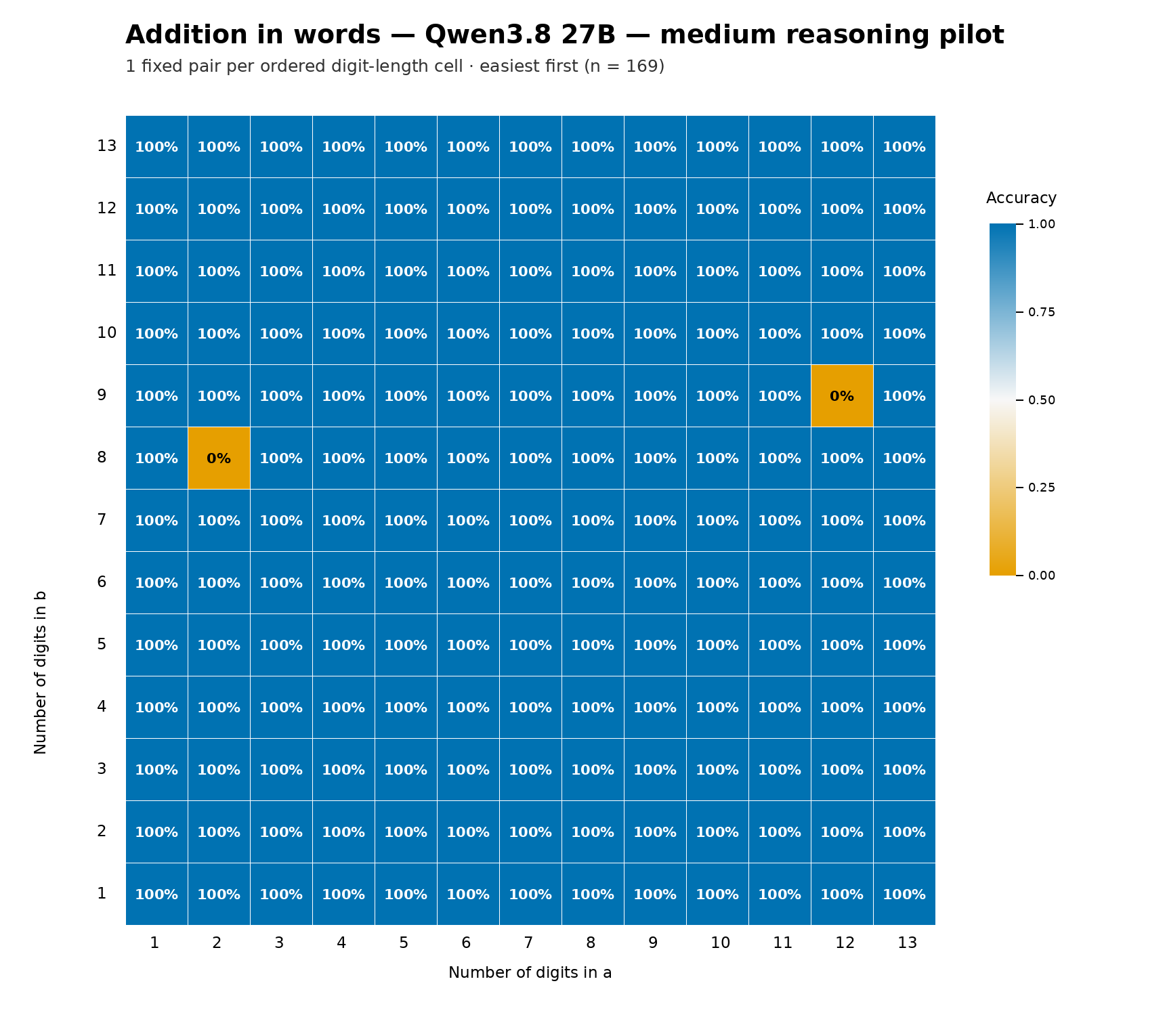
Qwen3.8 27B addition in words
The latest Qwen 3.8 model introduces significant enhancements, pushing the boundaries of natural language processing capabilities.
“Qwen 3.8's 27 billion parameters represent a significant leap in natural language processing, enhancing coherence and contextual understanding in AI applications.”
Key takeaways
- Qwen 3.8 features 27 billion parameters, enhancing its language processing capabilities.
- The model is designed for various applications, including chatbots and content generation.
- Qwen aims to compete with leading models like OpenAI's GPT-4 and Google's PaLM.
- Developers can leverage Qwen 3.8 for improved user interactions and content creation.
- The AI community will closely monitor its performance and real-world applications.
The recent release of the Qwen 3.8 model, boasting 27 billion parameters, marks a pivotal moment in the landscape of natural language processing (NLP). Developed by the Chinese AI company, Qwen, this model is designed to improve upon its predecessors by offering more nuanced understanding and generation of human language. With the rapid advancements in AI technology, Qwen 3.8 aims to provide developers and researchers with a powerful tool to tackle a variety of language-related tasks, from chatbots to content generation, and everything in between. The model's architecture has been refined to enhance its contextual understanding, allowing it to produce more coherent and contextually relevant outputs compared to earlier iterations.
This release comes at a time when competition in the AI space is intensifying, with several companies racing to develop models that can outperform existing benchmarks. Qwen 3.8 is positioned to compete directly with other leading models in the market, such as OpenAI's GPT-4 and Google's PaLM. The enhancements in Qwen 3.8 are not just incremental; they represent a significant leap forward in how AI can interpret and generate language, making it a noteworthy contender in the ongoing AI arms race. As developers and businesses seek to leverage AI for various applications, the capabilities of Qwen 3.8 could play a crucial role in shaping the future of AI-driven communication.
Key facts
| Field | Detail |
|---|---|
| Model Name | Qwen 3.8 |
| Parameters | 27 billion |
| Developer | Qwen |
| Release Date | October 2023 |
| Primary Use Cases | Chatbots, content generation, language tasks |
| Improvements | Enhanced contextual understanding, coherence |
| Competitors | OpenAI's GPT-4, Google's PaLM |
| Target Audience | Developers, researchers, businesses |
| Availability | Open for research and commercial use |
| Licensing | Commercial and research licenses available |
Who's involved
The Qwen 3.8 model is developed by Qwen, a prominent AI company based in China that focuses on advancing natural language processing technologies. The company has gained recognition for its innovative approaches to AI and machine learning, positioning itself as a key player in the global AI landscape. Qwen's team of researchers and engineers have worked diligently to refine the model's architecture, ensuring that it meets the demands of modern applications in NLP.
Background
Natural language processing has seen remarkable advancements over the past few years, with models becoming increasingly sophisticated in their ability to understand and generate human language. The introduction of transformer architectures has revolutionized the field, enabling models to process language data more effectively than ever before. Qwen 3.8 builds on this foundation, utilizing the latest techniques in deep learning to enhance its performance.
Prior to Qwen 3.8, the Qwen series had already established a reputation for delivering high-quality language models. However, the 3.8 version introduces several key improvements that set it apart from its predecessors. These enhancements include a more robust training dataset, refined algorithms for better contextual understanding, and optimizations that allow for faster processing times. As a result, Qwen 3.8 is not only capable of generating more accurate responses but also does so in a more efficient manner, making it an attractive option for developers and businesses looking to integrate AI into their operations.
How to read the numbers
While specific performance metrics for Qwen 3.8 are still emerging, it is essential to understand how its capabilities compare to other models in the market. The following table provides a snapshot of how Qwen 3.8 is expected to perform relative to its competitors:
| Benchmark | Expected Performance |
|---|---|
| Contextual Understanding | High |
| Coherence of Output | High |
| Speed of Processing | Moderate to High |
| Versatility in Tasks | High |
| User Satisfaction | TBD |
What you can do with it
For developers and businesses looking to leverage the capabilities of Qwen 3.8, there are several concrete steps to consider:
- Integrate Qwen 3.8 into chat applications to enhance user interactions with more natural and context-aware responses.
- Utilize the model for content generation in marketing, journalism, or creative writing, benefiting from its improved coherence and contextual understanding.
- Explore research opportunities by leveraging the model's capabilities to analyze language patterns and trends in various fields.
- Develop custom applications that require advanced language processing, such as sentiment analysis tools or language translation services.
What we're watching
As the AI landscape continues to evolve, the performance of Qwen 3.8 in real-world applications will be closely monitored. Key questions include how it stacks up against its competitors in terms of user satisfaction and practical utility. Additionally, the response from the developer community regarding its integration and usability will provide valuable insights into its adoption and impact.
Looking ahead, the next major milestone for Qwen 3.8 will be the release of comprehensive performance benchmarks that will allow for a more detailed comparison with other leading models. As developers begin to implement the model in various applications, feedback from the field will be crucial in understanding its strengths and weaknesses. The ongoing competition in the AI space will likely drive further innovations and improvements, making it an exciting time for advancements in natural language processing.
Source: Simon Willison's Weblog · Read original →
Instagram & TikTok: copy the link or quote and paste into a Story, Reel, or caption.
Digest
AI news by email
Curated stories with sources and takeaways. Confirm once — unsubscribe anytime.
Discussion
Comment here after signing in, or share the story to continue the conversation elsewhere.
Instagram & TikTok: copy the link and paste into a Story, Reel, or caption.
Log in or create an account to comment — Google / GitHub / X when those providers are configured.
No comments yet — start the thread.