

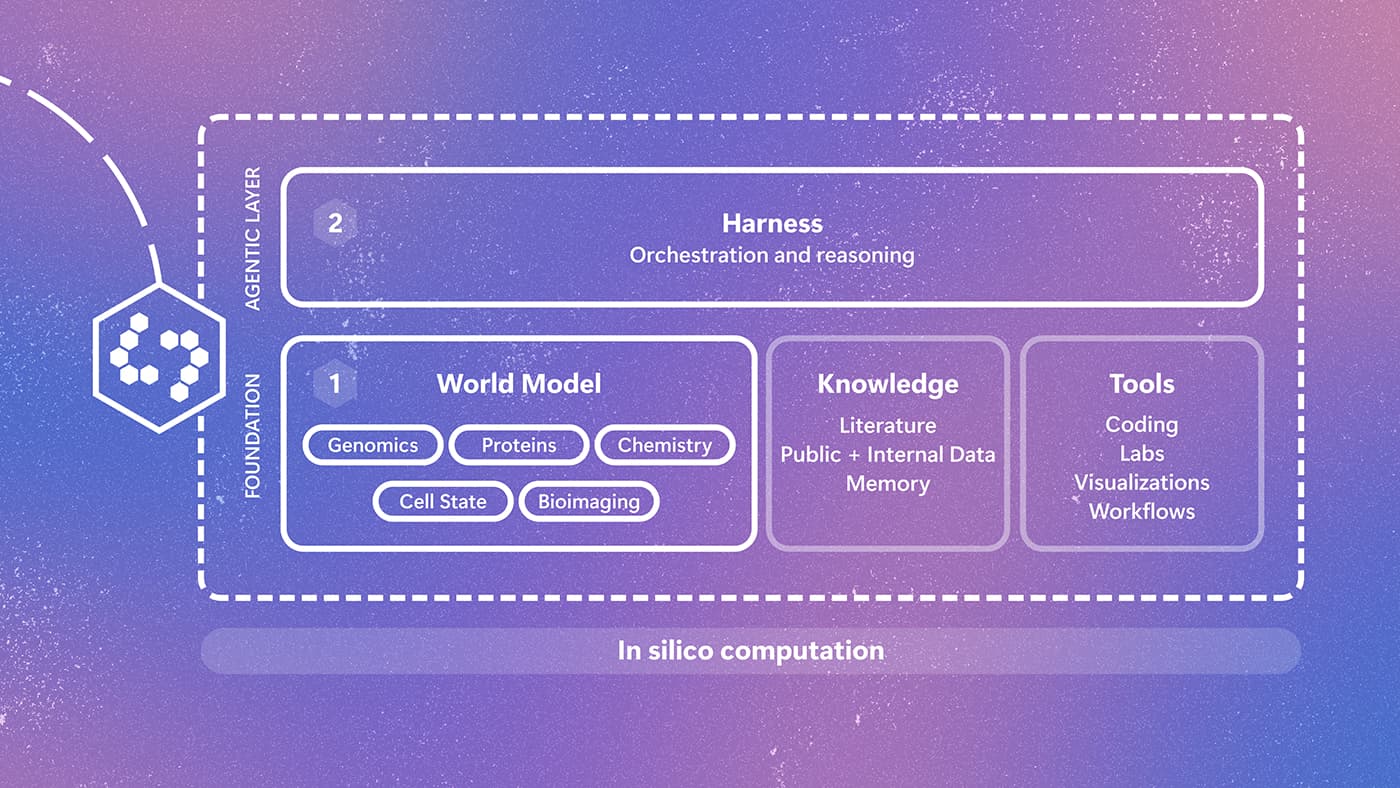
Introducing Quine: An AI research system designed for the complexity of biology
Microsoft unveils Quine, an innovative AI research system aimed at revolutionizing biological research through multimodal insights.
“Quine allows researchers to explore a vast computational space, prioritizing hypotheses and refining experimental approaches before they even enter the lab.”
Key takeaways
- Quine is designed to integrate diverse biological data sources for a holistic view of research.
- The system aims to enhance hypothesis generation and accelerate research processes.
- Microsoft Research leads the development of Quine, involving experts in AI and biology.
- Feedback from experimental results will help refine Quine's algorithms for better predictive capabilities.
The landscape of biological research is about to undergo a transformative shift with the introduction of Quine, a cutting-edge AI research system developed by Microsoft Research. This innovative platform aims to bridge the gaps across various biological scales and modalities, allowing scientists to explore a vast computational space that far exceeds the limitations of human intuition. Quine is designed to facilitate a more interconnected understanding of biological systems, enabling researchers to prioritize hypotheses and refine their experimental approaches before they even enter the lab. This represents a significant advancement in the way biological research is conducted, moving away from siloed thinking towards a more holistic view of biology.
Quine's development stems from the recognition that biology is inherently complex and interconnected. Traditional methods often compartmentalize biological research into discrete areas, which can hinder the discovery of novel insights. By leveraging a multimodal world model, Quine allows researchers to integrate data from various sources, including genomics, proteomics, and environmental factors, creating a comprehensive framework for understanding biological phenomena. This approach not only enhances the depth of analysis but also accelerates the pace of discovery, as researchers can quickly identify promising avenues for further investigation.
Key facts
| Field | Detail |
|---|---|
| Project Name | Quine |
| Developed by | Microsoft Research |
| Focus Area | Multimodal world model for biological research |
| Purpose | To connect insights across biological scales and modalities |
| Current Status | Early-stage research effort |
| Key Features | Computational search capabilities, hypothesis prioritization, feedback from experimental results |
| Target Users | Biologists, researchers in life sciences |
| Potential Impact | Enhanced understanding of biological systems, accelerated research processes |
| Integration | Combines data from genomics, proteomics, and environmental studies |
| Future Directions | Refinement of research directions based on experimental feedback |
The players
Quine is a project spearheaded by Microsoft Research, a division of Microsoft dedicated to advancing technology through innovative research. The team behind Quine comprises a diverse group of scientists and engineers who specialize in artificial intelligence, computational biology, and data science. Their collaborative efforts aim to create a tool that not only serves the scientific community but also pushes the boundaries of what is possible in biological research.
The significance of Quine lies in its ability to facilitate a more integrated approach to biological research. Traditionally, researchers have often worked within the confines of their specific disciplines, which can lead to a fragmented understanding of complex biological systems. Quine seeks to change this by allowing for a more holistic view, where insights from various fields can be connected and utilized to inform research directions.
Historically, biological research has been characterized by a series of breakthroughs that often occur in isolation. For instance, the Human Genome Project, which mapped the entire human genome, was a monumental achievement but primarily focused on genetic information without integrating other biological factors. Quine represents a shift towards a more interconnected methodology, where data from genomics, proteomics, and environmental studies can be synthesized to provide a comprehensive understanding of biological systems. This approach is reminiscent of systems biology, which emphasizes the study of complex interactions within biological systems, but Quine takes it a step further by incorporating advanced AI capabilities to enhance data analysis and hypothesis generation.
The introduction of AI systems like Quine is not without precedent. Other initiatives, such as IBM's Watson for Drug Discovery, have attempted to harness the power of AI to accelerate drug discovery and development. However, Quine's unique focus on creating a multimodal world model specifically tailored for biology sets it apart from existing solutions. By prioritizing the integration of diverse biological data sources, Quine aims to provide researchers with a more comprehensive toolkit for exploring the complexities of life.
How to read the numbers
| Benchmark | Score |
|---|---|
| Integration of data sources | N/A |
| Hypothesis generation efficiency | N/A |
| Feedback loop effectiveness | N/A |
| Research acceleration potential | N/A |
While specific performance metrics for Quine have yet to be established, the project's emphasis on integrating various data sources and enhancing hypothesis generation is expected to yield significant improvements in research efficiency. As the system evolves, it will be crucial to establish benchmarks that can quantify its impact on biological research outcomes.
What you can do with it
- Explore the interconnectedness of various biological data sources through Quine's multimodal framework.
- Utilize Quine to prioritize hypotheses based on computational insights before conducting laboratory experiments.
- Collaborate with other researchers to leverage Quine's capabilities for a more comprehensive understanding of biological systems.
- Provide feedback on experimental results to help refine Quine's algorithms and improve its predictive capabilities.
What we're watching
As Quine continues to develop, the next key milestone will be the establishment of specific performance metrics that can quantify its effectiveness in enhancing biological research. Researchers will be keen to see how well Quine can integrate diverse data sources and whether it can significantly accelerate the hypothesis generation process. Additionally, the feedback loop between experimental results and computational insights will be closely monitored to assess its impact on future research directions.
Looking ahead, Quine represents a promising step towards a more integrated and efficient approach to biological research. As the project progresses, it will be essential to evaluate its real-world applications and the extent to which it can reshape the landscape of life sciences. The potential for Quine to facilitate groundbreaking discoveries in biology is immense, and its success could pave the way for similar AI-driven initiatives across other scientific disciplines.
Source: Microsoft Research Blog · Read original →
Instagram & TikTok: copy the link or quote and paste into a Story, Reel, or caption.
Digest
AI news by email
Curated stories with sources and takeaways. Confirm once — unsubscribe anytime.
Discussion
Comment here after signing in, or share the story to continue the conversation elsewhere.
Instagram & TikTok: copy the link and paste into a Story, Reel, or caption.
Log in or create an account to comment — Google / GitHub / X when those providers are configured.
No comments yet — start the thread.


