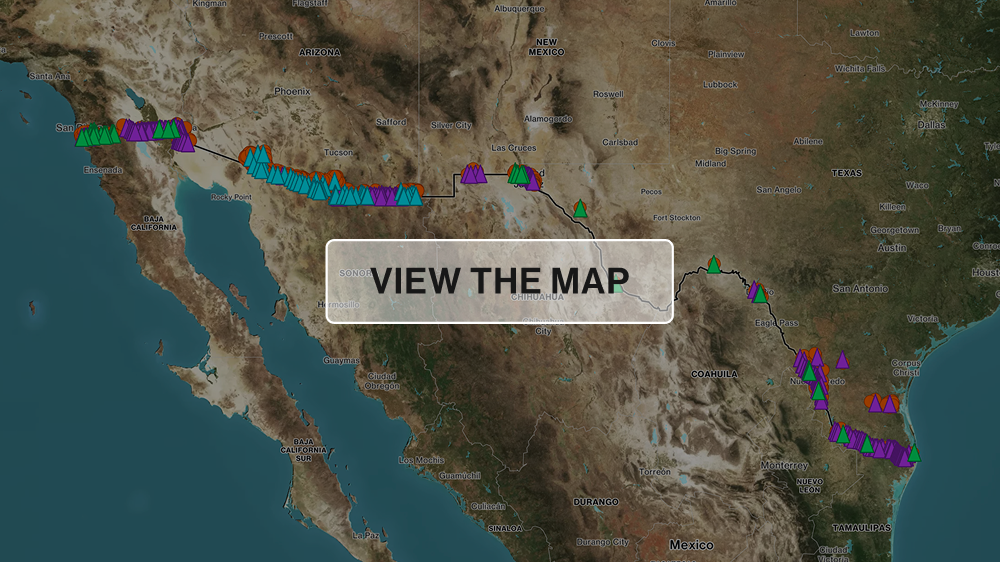
How we made the first comprehensive map of deaths along the US border’s “virtual wall”
A groundbreaking investigation reveals the deadly consequences of surveillance along the US-Mexico border.
The recent collaborative investigation by MIT Technology Review and Times of San Diego has unveiled a harrowing reality along the US-Mexico border, where government surveillance towers, intended to monitor and apprehend undocumented migrants, have coincided with a disturbing rise in deaths. Over a span of 15 months, journalists meticulously gathered data and conducted interviews to create the first comprehensive map detailing the fatalities that have occurred in proximity to these surveillance installations. This effort sheds light on the unintended consequences of border enforcement strategies that rely heavily on technology rather than addressing the root causes of migration.
The investigation began with a critical question: Why do so many individuals perish near these surveillance towers? The answer lies in a complex interplay of factors, including the harsh environmental conditions of the border region, the increased militarization of border enforcement, and the shifting patterns of migration. As the US government has invested heavily in surveillance technology, the consequences of these strategies have not been fully understood, particularly regarding the safety of those attempting to cross the border. The findings of this investigation challenge the narrative that technology alone can effectively manage border security without incurring significant human costs.
Key facts
| Field | Detail |
|---|---|
| Investigation Duration | 15 months |
| Collaborating Outlets | MIT Technology Review, Times of San Diego |
| Focus of Investigation | Deaths near US-Mexico border surveillance towers |
| Mapping Outcome | First comprehensive map of fatalities along the border |
| Key Question | Why do deaths occur near surveillance installations? |
| Factors Identified | Harsh environmental conditions, militarization of border enforcement, migration patterns |
To understand the significance of this investigation, it is essential to consider the historical context of border enforcement in the United States. The US-Mexico border has long been a focal point for immigration policy and enforcement, with various strategies employed over the decades to deter unauthorized crossings. In recent years, the trend has shifted towards a reliance on advanced surveillance technologies, including drones, cameras, and sensors, which are intended to enhance border security. However, this technological approach has raised ethical questions regarding its effectiveness and the human cost associated with its implementation.
Previous studies and reports have highlighted the dangers faced by migrants attempting to cross the border, particularly in remote and rugged areas. The introduction of surveillance technologies has not necessarily correlated with a decrease in fatalities; in fact, it may have inadvertently contributed to increased risks. As migrants are forced into more treacherous routes to evade detection, the likelihood of accidents and deaths rises significantly. This investigation provides a crucial perspective on the consequences of prioritizing technology over humane immigration policies.
How to read the numbers
| Metric | Value |
|---|---|
| Total Deaths Mapped | Not specified |
| Surveillance Towers Present | Not specified |
| Average Distance of Deaths from Towers | Not specified |
| Environmental Factors Considered | Yes |
The findings from this investigation serve as a wake-up call for policymakers and society at large. The mapping of deaths along the border raises critical questions about the effectiveness of current border enforcement strategies and the ethical implications of using technology as a primary tool for managing migration. As the investigation highlights, the reliance on surveillance towers has not only failed to prevent deaths but may have exacerbated the dangers faced by migrants. This calls for a reevaluation of how border security is approached, emphasizing the need for humane solutions that prioritize the safety and dignity of individuals.
Practical takeaways
- For Policymakers: Consider the human impact of surveillance technologies and prioritize humane immigration policies.
- For Activists: Use the findings to advocate for safer crossing routes and better support for migrants.
- For Researchers: Explore the relationship between technology use in border enforcement and its impact on migrant safety.
The investigation's findings are particularly timely as discussions around immigration policy continue to evolve in the United States. As the government grapples with how to manage border security effectively, the insights gained from this comprehensive mapping effort will be crucial in shaping future policies. The challenge remains: how to balance the need for security with the imperative to protect human lives in one of the most contentious areas of American policy.
Source: MIT Technology Review - AI · Read original →
Instagram & TikTok: copy the link and paste into a Story, Reel, or caption.
Digest
AI news by email
Curated stories with sources and takeaways. Confirm once — unsubscribe anytime.
Discussion
Comment here after signing in, or share the story to continue the conversation elsewhere.
Instagram & TikTok: copy the link and paste into a Story, Reel, or caption.
Log in or create an account to comment — Google / GitHub / X when those providers are configured.
No comments yet — start the thread.