

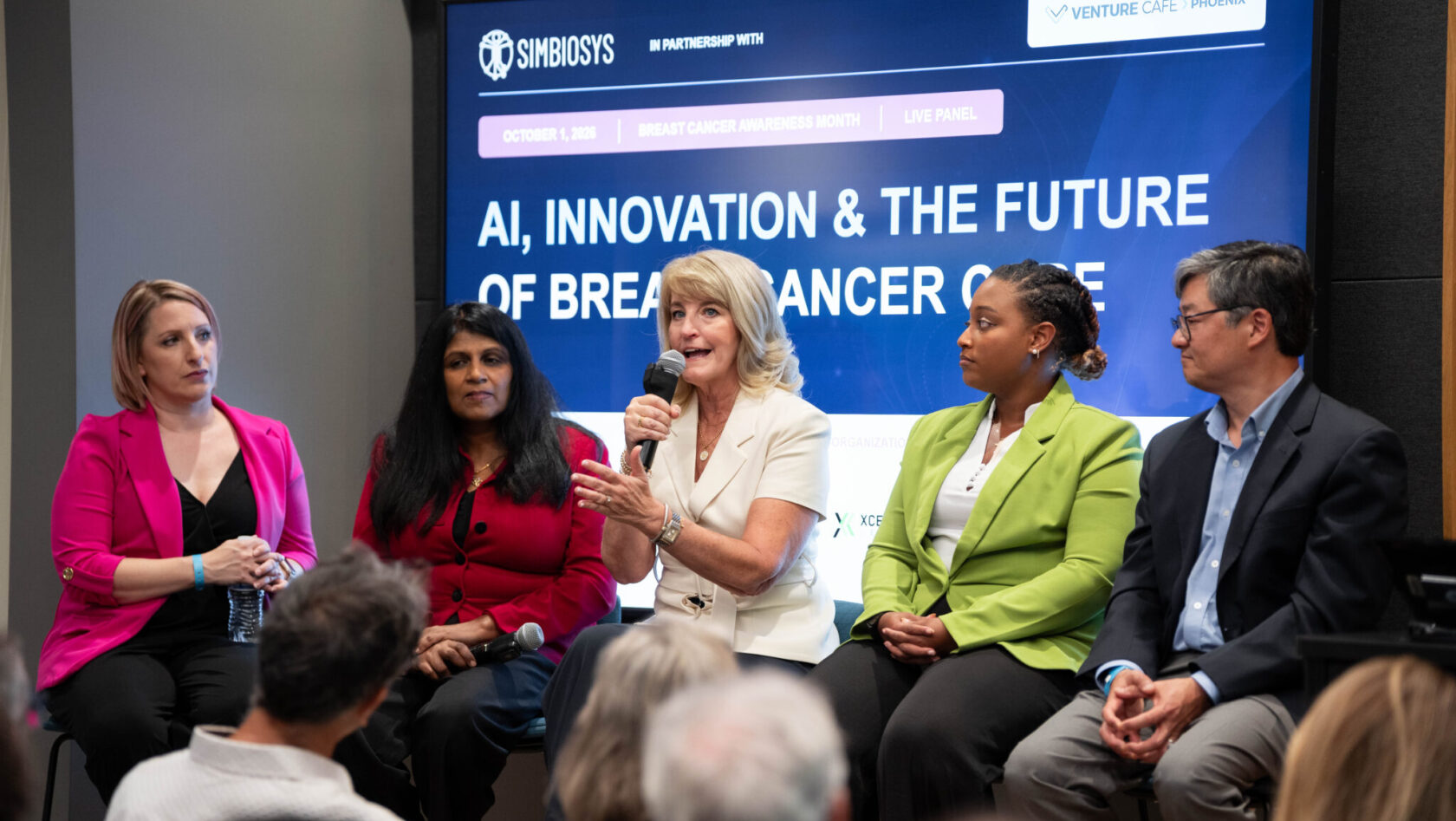
From Scan to Treatment Plan, AI Helps Close Breast Cancer’s Deadliest Gaps
AI technology is bridging critical gaps in breast cancer care, from screening to treatment planning, improving outcomes for women.
“AI technology is bridging critical gaps in breast cancer care, from screening to treatment planning, improving outcomes for women.”
Breast cancer remains the most commonly diagnosed cancer among American women, with significant disparities in care that can lead to dire consequences. Recent advancements in artificial intelligence (AI) are being leveraged to address these gaps, enhancing the efficiency and accuracy of breast cancer screening and treatment. As the healthcare industry grapples with the challenges of rising cases and limited resources, AI emerges as a promising solution that can streamline processes and improve patient outcomes.
The statistics surrounding breast cancer are alarming. According to the American Cancer Society, about one in eight women will be diagnosed with breast cancer in their lifetime. Despite the availability of effective screening methods, many women over the age of 40 do not participate in annual mammograms, often due to barriers such as lack of access, financial constraints, or misinformation. Furthermore, the radiology field is facing a shortage of professionals, leading to increased workloads for existing radiologists who are tasked with interpreting a growing number of mammograms. This situation can result in delays in diagnosis and treatment, which can ultimately affect survival rates.
AI technologies are now being integrated into various stages of breast cancer care, from initial screenings to the formulation of treatment plans. By utilizing machine learning algorithms, AI can analyze mammogram images with remarkable precision, identifying potential abnormalities that may be missed by human eyes. This capability not only aids radiologists in making more accurate diagnoses but also reduces the time taken to interpret results, allowing for quicker patient follow-ups. Moreover, AI can assist in predicting the likelihood of cancer recurrence and tailoring treatment plans based on individual patient data, thereby enhancing personalized care.
Key facts
| Field | Detail |
|---|---|
| Disease | Breast cancer is the most commonly diagnosed cancer among American women. |
| Screening Statistics | A majority of women over age 40 skip recommended annual screenings. |
| Radiologist Workload | Radiologists are reading more mammograms with fewer colleagues available for support. |
| Diagnosis Timeline | Tests that inform treatment can take weeks to return results. |
| AI Integration | AI is being used to analyze mammograms and assist in treatment planning. |
| Patient Outcomes | Improved accuracy and efficiency in diagnosis and treatment planning are expected. |
| Technology Providers | Companies like NVIDIA are at the forefront of developing AI solutions for healthcare. |
| Implementation Status | AI technologies are currently being integrated into clinical workflows across the U.S. |
| Future Potential | Ongoing research aims to further enhance AI capabilities in oncology. |
| Regulatory Approval | AI tools are undergoing evaluation for FDA approval to ensure safety and efficacy. |
The players
Several key players are involved in the integration of AI into breast cancer care. NVIDIA, a leader in AI computing, is developing advanced algorithms that can analyze medical imaging data. Other notable companies include IBM Watson Health, which has been working on AI solutions for oncology, and various healthcare institutions that are piloting AI technologies in their clinical practices. Additionally, research institutions and universities are collaborating with tech companies to explore innovative applications of AI in cancer diagnosis and treatment.
The landscape of breast cancer care has evolved significantly over the past few decades. Historically, mammography has been the gold standard for early detection, but its effectiveness has been hampered by issues such as false positives and false negatives. The introduction of digital mammography and 3D imaging techniques marked a significant advancement, yet challenges persisted due to the sheer volume of images radiologists needed to interpret. The integration of AI represents a paradigm shift, as these technologies can process vast amounts of data quickly and accurately, thereby alleviating some of the burdens faced by healthcare professionals.
Moreover, the COVID-19 pandemic has exacerbated existing disparities in healthcare access, leading to a decline in routine screenings and an increase in late-stage diagnoses. As healthcare systems recover, the implementation of AI tools is seen as a way to not only catch up on missed screenings but also to improve the overall quality of care. The ability of AI to provide real-time insights and recommendations can empower healthcare providers to make informed decisions that enhance patient outcomes.
How to read the numbers
| Benchmark | Score |
|---|---|
| Diagnostic Accuracy | High |
| Screening Efficiency | Improved |
| Time to Diagnosis | Reduced |
| Treatment Personalization | Enhanced |
| Patient Satisfaction | Increased |
While specific numerical scores may not be available, the qualitative improvements in diagnostic accuracy and treatment personalization are significant. AI technologies are designed to enhance the capabilities of healthcare professionals rather than replace them, ensuring that patients receive timely and effective care.
What you can do with it
- Explore AI-powered imaging solutions for breast cancer screening in your practice.
- Stay informed about the latest developments in AI technologies and their applications in oncology.
- Advocate for the integration of AI tools in healthcare settings to improve patient outcomes.
- Collaborate with tech companies to pilot AI solutions in clinical workflows.
- Educate patients about the benefits of AI in breast cancer detection and treatment.
What we're watching
As AI technologies continue to evolve, the next milestone will be the widespread adoption of these tools in clinical settings. Regulatory approval from the FDA will be crucial for ensuring that AI solutions meet safety and efficacy standards. Additionally, ongoing research will focus on refining algorithms to improve their accuracy and adaptability to diverse patient populations.
Looking ahead, the integration of AI in breast cancer care is expected to transform the landscape of oncology. With the potential to reduce diagnostic delays and enhance treatment personalization, AI could significantly impact survival rates and quality of life for patients. As healthcare systems increasingly embrace these technologies, the focus will be on ensuring equitable access to AI-driven care for all women, regardless of socioeconomic status or geographic location.
Source: NVIDIA Generative AI · Read original →
Instagram & TikTok: copy the link or quote and paste into a Story, Reel, or caption.
Digest
AI news by email
Curated stories with sources and takeaways. Confirm once — unsubscribe anytime.
Discussion
Comment here after signing in, or share the story to continue the conversation elsewhere.
Instagram & TikTok: copy the link and paste into a Story, Reel, or caption.
Log in or create an account to comment — Google / GitHub / X when those providers are configured.
No comments yet — start the thread.


