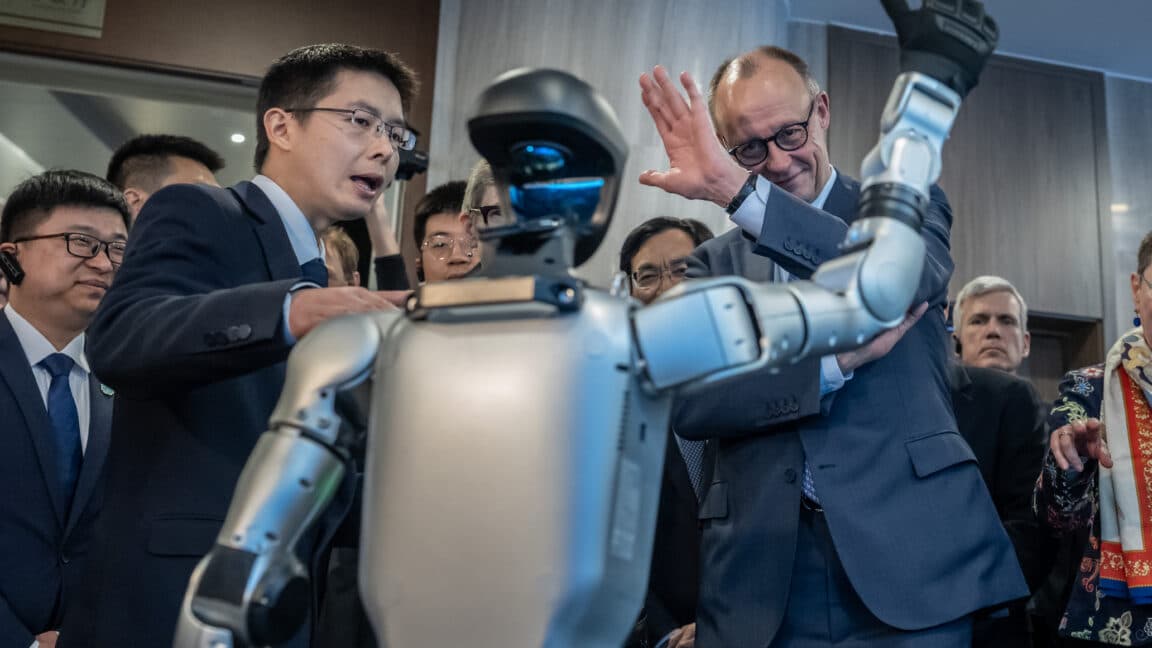
Founder’s cost-cutting obsession drove Unitree lead in cheap humanoid robots
Unitree's founder Wang Xingxing's micromanagement approach has propelled the company to the forefront of affordable humanoid robotics.
Unitree Robotics has emerged as a key player in the competitive landscape of humanoid robots, largely due to the intense management style of its founder, Wang Xingxing. Under his leadership, the company has successfully developed cost-effective robotic solutions that have garnered attention from both consumers and industry experts alike. This rapid ascent in the robotics sector raises questions about the sustainability of such a micromanagement approach and whether it can scale as the company grows.
Founded in 2017, Unitree Robotics has focused on creating affordable humanoid robots that can be utilized in various applications, from research and development to entertainment and education. The company's flagship product, the A1 robot, is designed to be agile and versatile, capable of navigating complex environments while maintaining a low price point. This focus on affordability has allowed Unitree to capture a significant share of the market, especially among educational institutions and small businesses looking to explore robotics without breaking the bank.
Wang Xingxing's hands-on leadership style has been a double-edged sword for Unitree. On one hand, his meticulous attention to detail and insistence on cost-cutting measures have helped the company streamline its production processes and reduce overhead costs. This has enabled Unitree to offer competitive pricing in a market where many players struggle to balance quality and affordability. On the other hand, such micromanagement raises concerns about scalability and the potential for burnout among employees. As the company continues to grow, it remains to be seen whether Wang's approach will be sustainable in the long term.
Key facts
| Field | Detail |
|---|---|
| Company Name | Unitree Robotics |
| Founder | Wang Xingxing |
| Year Founded | 2017 |
| Flagship Product | A1 Humanoid Robot |
| Market Focus | Affordable humanoid robots |
| Key Competitors | Boston Dynamics, Agility Robotics |
| Leadership Style | Micromanagement |
| Primary Applications | Education, research, entertainment |
The landscape of humanoid robotics has evolved significantly over the past decade, with advancements in artificial intelligence and machine learning driving innovation. Companies like Boston Dynamics and Agility Robotics have set high standards for performance and capabilities, but often at a premium price. Unitree’s strategy of focusing on affordability without sacrificing functionality has allowed it to carve out a niche in this competitive market. The A1 robot, for instance, is priced significantly lower than its competitors while still offering impressive features such as obstacle avoidance and autonomous navigation.
Historically, the robotics industry has been characterized by high costs and limited accessibility, which has hindered widespread adoption. However, Unitree's approach signals a shift towards democratizing robotics, making it more accessible to a broader audience. By prioritizing cost-cutting measures and efficient production, Unitree has positioned itself as a viable alternative for those who may have previously considered humanoid robots out of reach.
Benchmark snapshot
Benchmark snapshot
| Benchmark | Score |
|---|---|
| Price of A1 Robot | $2,700 |
| Weight | 12 kg |
| Battery Life | 2 hours |
| Speed | 3.5 km/h |
| Load Capacity | 5 kg |
| Autonomous Navigation | Yes |
Unitree's A1 robot offers a range of features that make it attractive for various applications. The robot is lightweight, weighing in at just 12 kg, which enhances its mobility and ease of use. With a battery life of approximately two hours, it can operate autonomously for a significant duration, making it suitable for tasks that require extended use. Additionally, its speed of 3.5 km/h allows it to navigate environments efficiently, while the ability to carry a load of up to 5 kg expands its utility in practical scenarios.
For builders and users interested in humanoid robotics, there are several practical takeaways from Unitree's approach. First, the emphasis on cost-effectiveness demonstrates that it is possible to create functional robots without exorbitant pricing. This opens the door for educational institutions and small businesses to experiment with robotics in ways that were previously financially prohibitive. Second, the focus on micromanagement may inspire other leaders in the tech space to adopt similar strategies, though they should be cautious of the potential downsides associated with such an approach.
Looking ahead, the robotics industry is poised for further growth as technology continues to advance. Unitree's success raises questions about the future of humanoid robotics and whether other companies will follow suit in prioritizing affordability. As competition intensifies, it will be crucial for Unitree to maintain its innovative edge while also considering the implications of its management style on employee morale and operational efficiency. The next steps for Unitree will involve scaling its production capabilities and potentially expanding its product line, all while navigating the challenges that come with rapid growth in a dynamic industry.
Source: Ars Technica - AI · Read original →
Instagram & TikTok: copy the link and paste into a Story, Reel, or caption.
Digest
AI news by email
Curated stories with sources and takeaways. Confirm once — unsubscribe anytime.
Discussion
Comment here after signing in, or share the story to continue the conversation elsewhere.
Instagram & TikTok: copy the link and paste into a Story, Reel, or caption.
Log in or create an account to comment — Google / GitHub / X when those providers are configured.
No comments yet — start the thread.