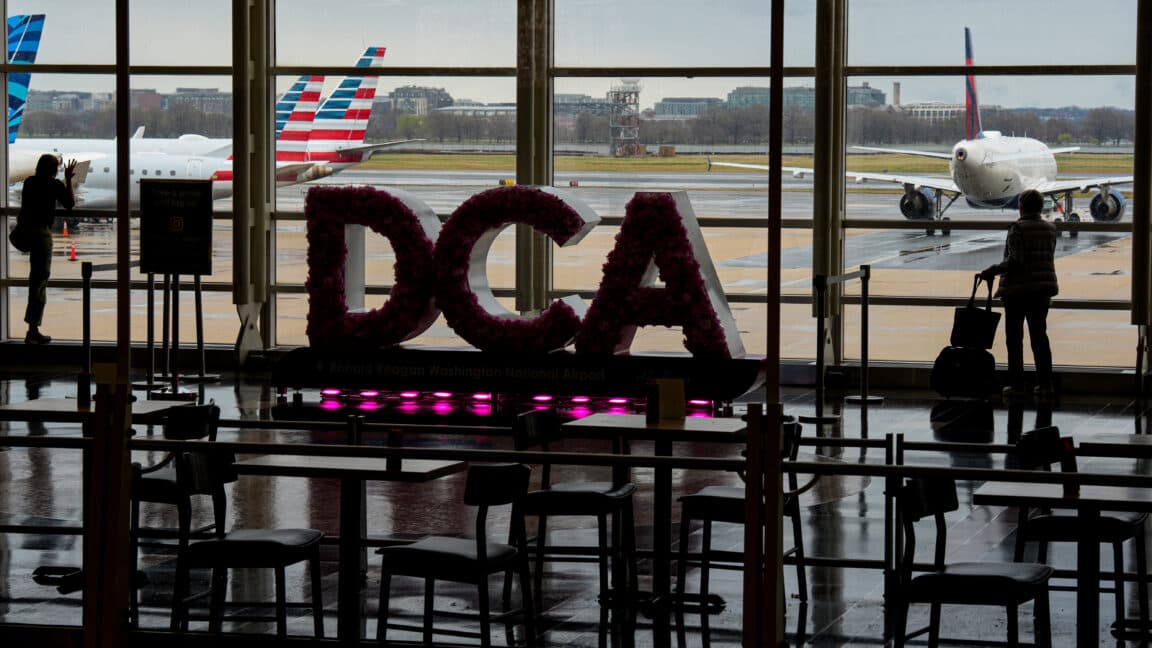
FAA tees up $875M AI tool to help manage air traffic congestion
The FAA is investing $875 million in an AI tool aimed at alleviating air traffic congestion in Washington, D.C.
The Federal Aviation Administration (FAA) has announced plans to develop an advanced artificial intelligence tool designed to manage air traffic congestion, particularly in the Washington, D.C. area. This initiative comes as air travel demand continues to rise, leading to increased congestion at some of the nation’s busiest airports. The FAA's investment of $875 million signifies a substantial commitment to leveraging technology in order to enhance air traffic management and improve overall safety and efficiency in the skies. The project is expected to serve as a pilot program before a potential nationwide rollout, indicating the FAA's strategic approach to modernizing air traffic control systems across the United States.
The AI tool aims to address the growing challenges faced by air traffic controllers, who must navigate complex airspace with a high volume of flights. By utilizing machine learning algorithms and data analytics, the FAA intends to create a system that can predict congestion patterns and optimize flight paths in real-time. This proactive approach is expected to reduce delays, improve fuel efficiency, and enhance the overall passenger experience. The FAA's move is part of a broader trend in the aviation industry, where technology is increasingly being integrated into operational processes to meet the demands of modern air travel.
Key facts
| Field | Detail |
|---|---|
| Investment Amount | $875 million |
| Focus Area | Air traffic congestion management in Washington, D.C. |
| Technology Used | Artificial Intelligence and machine learning |
| Expected Outcome | Reduced delays and improved flight efficiency |
| Rollout Plan | Pilot program followed by potential nationwide rollout |
| Stakeholders Involved | FAA, air traffic controllers, airlines |
| Timeline | To be announced |
| Data Sources | Flight data, weather patterns, historical congestion |
The FAA's initiative to implement AI in air traffic management is not entirely unprecedented. Other countries have already begun exploring similar technologies to enhance their air traffic control systems. For instance, the European Union has been investing in the Single European Sky ATM Research (SESAR) program, which aims to modernize air traffic management across Europe. The FAA's approach, however, is particularly significant given the unique challenges posed by the airspace over Washington, D.C., which is characterized by a high density of flights and complex airspace restrictions due to its proximity to the nation's capital.
In recent years, the aviation industry has faced increasing pressure to improve operational efficiency while maintaining safety standards. The COVID-19 pandemic highlighted the vulnerabilities in air travel systems, leading to a renewed focus on technological solutions. The FAA's investment in AI represents a critical step toward addressing these challenges and ensuring that the air traffic management system can adapt to future demands. By harnessing the power of AI, the FAA aims to create a more resilient and responsive air traffic control framework that can better accommodate fluctuations in air travel demand.
How to read the numbers
| Benchmark | Score |
|---|---|
| Flight delay reduction potential | TBD |
| Efficiency improvement potential | TBD |
| AI prediction accuracy | TBD |
| Real-time data processing speed | TBD |
While specific performance metrics for the AI tool have not yet been disclosed, the FAA is likely to establish benchmarks to evaluate its effectiveness once implemented. These benchmarks will be crucial for assessing the tool's impact on flight delays, operational efficiency, and overall air traffic management. The FAA's commitment to transparency in reporting these metrics will be essential for gaining public trust and ensuring that stakeholders are informed about the tool's performance.
What you can do with it
- Stay Informed: Keep up with FAA announcements regarding the AI tool's development and implementation timeline.
- Engage with Stakeholders: Airlines and air traffic controllers should participate in discussions about the integration of AI into air traffic management.
- Explore AI Applications: Businesses in the aviation sector can explore how AI can enhance their operations and customer experiences.
- Advocate for Transparency: Encourage the FAA to provide regular updates on the AI tool's performance and impact on air traffic management.
As the FAA moves forward with this ambitious project, the aviation industry will be watching closely to see how effectively AI can be integrated into air traffic management systems. The potential for improved efficiency and reduced congestion is significant, but the success of the initiative will ultimately depend on the FAA's ability to navigate the complexities of implementation and ensure that the technology meets the needs of all stakeholders involved. With the pilot program set to launch in the D.C. area, the coming months will be critical in determining the future of AI in air traffic control and its implications for air travel across the United States.
Source: Ars Technica - AI · Read original →
Instagram & TikTok: copy the link and paste into a Story, Reel, or caption.
Digest
AI news by email
Curated stories with sources and takeaways. Confirm once — unsubscribe anytime.
Discussion
Comment here after signing in, or share the story to continue the conversation elsewhere.
Instagram & TikTok: copy the link and paste into a Story, Reel, or caption.
Log in or create an account to comment — Google / GitHub / X when those providers are configured.
No comments yet — start the thread.