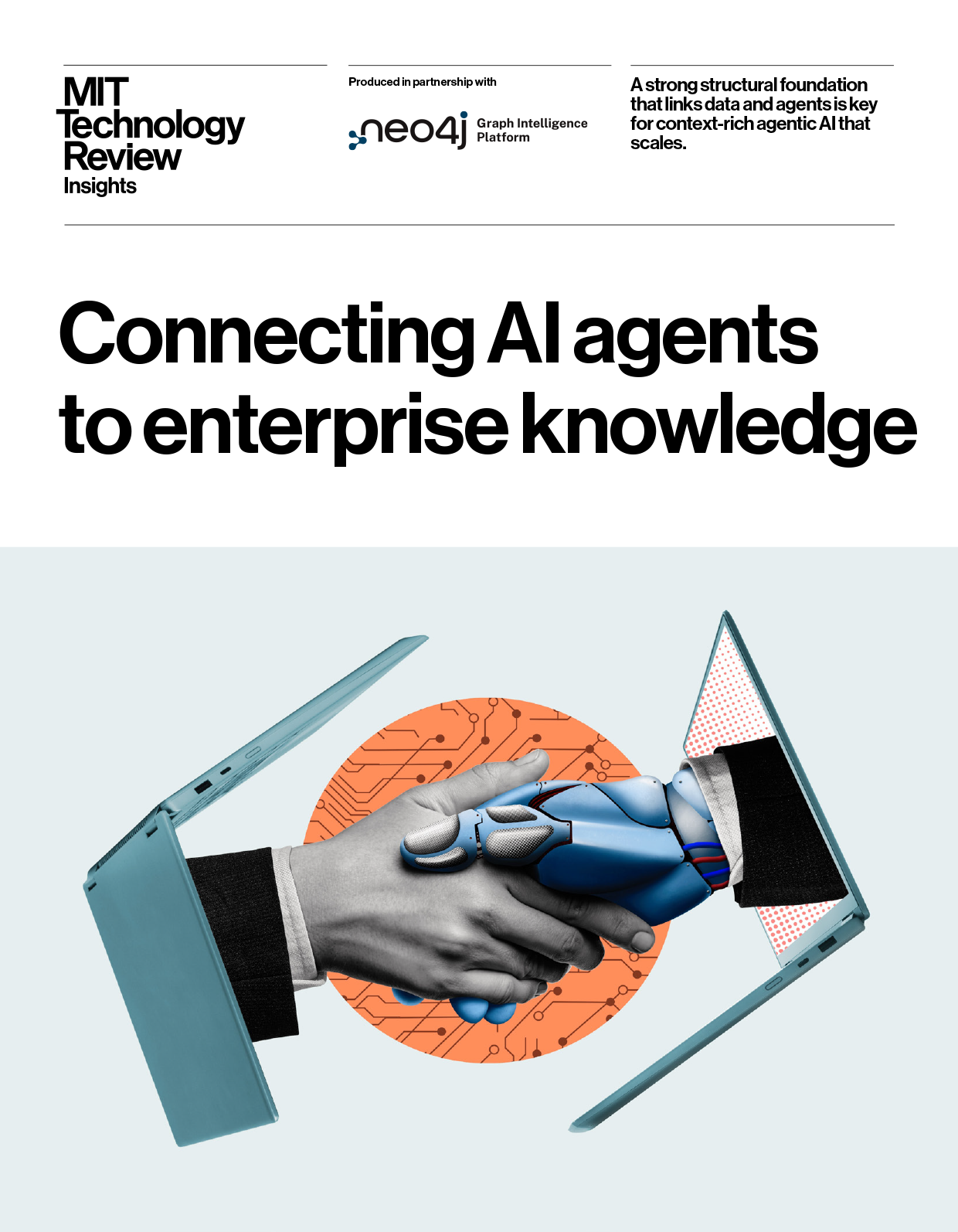
Connecting AI agents to enterprise knowledge
AI agents are evolving to integrate enterprise knowledge, enhancing decision-making and contextual understanding within organizations.
“AI agents equipped with enterprise knowledge can transform decision-making processes, enabling organizations to act with greater context and precision.”
Key takeaways
- AI agents are evolving to integrate enterprise knowledge for better decision-making.
- Knowledge is essential for interpreting data within organizational contexts.
- Major tech companies and startups are leading the charge in knowledge integration.
- Organizations must invest in knowledge management systems to leverage AI effectively.
AI systems have made remarkable strides in data processing and analysis, yet they often fall short in one critical area: knowledge. Knowledge, as opposed to mere data, encompasses the understanding of what that data signifies within the specific context of an organization. This distinction is crucial for AI agents tasked with reasoning about complex situations, making informed decisions, and ultimately driving business outcomes. Recent advancements in connecting AI agents to enterprise knowledge aim to bridge this gap, enabling these systems to leverage not just raw data but also the nuanced understanding that comes from organizational context.
The challenge of integrating knowledge into AI systems is not new. Organizations have long struggled with the sheer volume of data generated daily, which can obscure the insights that truly matter. Traditional AI models often analyze this data in isolation, lacking the contextual framework necessary to interpret it effectively. As a result, decision-making processes can become disjointed, leading to missed opportunities and inefficiencies. The recent focus on enhancing AI agents with enterprise knowledge is a response to these challenges, aiming to create systems that can understand and act upon data in a way that aligns with organizational goals and values.
Key facts
| Field | Detail |
|---|---|
| Focus | Integrating knowledge into AI agents for enterprise applications |
| Importance | Enhances decision-making and contextual understanding |
| Current challenge | AI agents often lack the ability to interpret data within context |
| Recent advancements | New methods and frameworks for knowledge integration |
| Target users | Organizations utilizing AI for data-driven decision-making |
| Expected outcome | Improved efficiency and effectiveness in business processes |
| Key players | AI developers, enterprise software companies, knowledge management firms |
| Future implications | Potential for more autonomous and intelligent AI systems |
| Industry impact | Could reshape how businesses leverage AI in operations |
| Timeline | Ongoing developments in AI knowledge integration |
Who's involved
Several key players are driving the integration of knowledge into AI systems. Major technology companies, including IBM and Microsoft, are at the forefront, developing frameworks that allow AI agents to access and utilize organizational knowledge bases. Additionally, startups focused on knowledge management and AI are emerging, offering innovative solutions that enhance the capabilities of traditional AI systems. Collaborations between these companies and academic institutions are also fostering research that explores new methodologies for knowledge integration.
The importance of knowledge in AI cannot be overstated. In the past, AI systems primarily focused on data processing capabilities, which led to impressive advancements in areas such as natural language processing and image recognition. However, as organizations increasingly rely on AI for critical decision-making, the limitations of data-centric approaches have become apparent. The lack of contextual understanding can lead to misinterpretations and suboptimal decisions, highlighting the need for AI agents that can reason and act based on a comprehensive understanding of their environment.
In recent years, there has been a shift towards developing AI systems that not only analyze data but also incorporate knowledge management principles. This evolution is akin to the transition from simple calculators to sophisticated decision support systems. Just as calculators evolved to include more complex functions, AI agents are now being designed to integrate knowledge from various sources, including internal databases, external information, and even human expertise. This shift is crucial for organizations seeking to harness the full potential of AI technologies.
How to read the numbers
While specific performance metrics for the newly integrated AI systems are still being developed, the following benchmarks can provide insight into the expected capabilities of these systems:
| Benchmark | Score |
|---|---|
| Knowledge integration | TBD |
| Decision-making accuracy | TBD |
| Contextual understanding | TBD |
| User satisfaction | TBD |
| Operational efficiency | TBD |
These benchmarks will help organizations evaluate the effectiveness of AI agents equipped with enterprise knowledge. As these systems continue to evolve, it will be essential for organizations to track their performance against these metrics to ensure they are achieving the desired outcomes.
What you can do with it
Organizations looking to leverage AI agents with integrated knowledge can take several concrete steps:
- Assess current data infrastructure: Evaluate existing data management practices to identify gaps in knowledge integration.
- Invest in knowledge management systems: Implement systems that facilitate the capture and organization of knowledge within the organization.
- Collaborate with AI developers: Work with technology partners to develop customized AI solutions that incorporate organizational knowledge.
- Train employees on AI utilization: Ensure that staff are equipped to effectively interact with AI agents and understand their capabilities.
- Monitor and refine AI performance: Continuously evaluate the performance of AI systems, making adjustments based on feedback and evolving organizational needs.
What we're watching
As the integration of knowledge into AI systems progresses, we are closely monitoring the development of industry standards and best practices. The emergence of frameworks that facilitate knowledge sharing and collaboration among AI agents is a key area of interest. Additionally, the potential for regulatory implications surrounding data privacy and knowledge management is an important consideration as organizations adopt these advanced AI solutions.
Looking ahead, the future of AI agents connected to enterprise knowledge holds significant promise. As organizations increasingly recognize the value of contextual understanding, we can expect to see a surge in demand for AI systems that can reason and make decisions based on comprehensive knowledge. This shift could lead to more autonomous AI agents, capable of navigating complex business environments and delivering insights that drive strategic initiatives. The evolution of AI in this direction not only enhances operational efficiency but also empowers organizations to remain competitive in an increasingly data-driven world.
Source: MIT Technology Review - AI · Read original →
Instagram & TikTok: copy the link or quote and paste into a Story, Reel, or caption.
Digest
AI news by email
Curated stories with sources and takeaways. Confirm once — unsubscribe anytime.
Discussion
Comment here after signing in, or share the story to continue the conversation elsewhere.
Instagram & TikTok: copy the link and paste into a Story, Reel, or caption.
Log in or create an account to comment — Google / GitHub / X when those providers are configured.
No comments yet — start the thread.