Building AI builders: Playbook for closing the AI knowledge-capability gap
AWS unveils a playbook to transform non-technical professionals into AI builders, bridging the gap between AI knowledge and capability.
“AWS's playbook transforms non-technical professionals into confident AI builders, bridging the gap between AI knowledge and practical application.”
Key takeaways
- AWS has developed a playbook to empower non-technical professionals as AI builders.
- The program lasts six weeks and emphasizes hands-on learning.
- Organizations can tailor the training to their specific needs and contexts.
- The playbook aims to bridge the gap between AI knowledge and capability.
- Monitoring outcomes will be crucial for assessing the program's effectiveness.
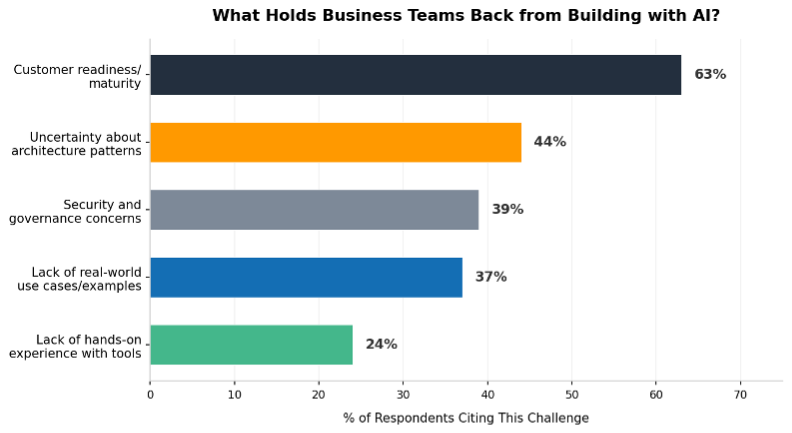
The rapid evolution of artificial intelligence has created a pressing need for organizations to harness its potential effectively. However, many companies face a significant hurdle: the gap between understanding AI concepts and the ability to implement them in practical scenarios. AWS has recognized this challenge and developed a comprehensive playbook aimed at empowering non-technical, customer-facing professionals to become proficient AI builders within a mere six weeks. This initiative not only addresses the knowledge-capability gap but also sets a precedent for how organizations can cultivate AI expertise among their workforce.
The playbook is a culmination of AWS's extensive experience in the AI domain, drawing from successful training programs and real-world applications. It outlines a structured approach to transforming employees who may have little to no technical background into confident AI practitioners. By focusing on hands-on learning, practical applications, and collaborative projects, AWS aims to demystify AI and make it accessible to a broader audience. This initiative is particularly timely as businesses increasingly recognize the need to integrate AI into their operations to remain competitive in a rapidly changing market.
Key facts
| Field | Detail |
|---|---|
| Organization | AWS |
| Target Audience | Non-technical, customer-facing professionals |
| Duration | Six weeks |
| Focus | Hands-on learning and practical applications |
| Goal | Bridge the AI knowledge-capability gap |
| Methodology | Structured training program |
| Outcome | Empowered AI builders |
| Industry Impact | Enhanced AI adoption across organizations |
| Availability | Playbook accessible to organizations |
| Training Format | Collaborative projects and workshops |
Who's involved
The primary organization involved in this initiative is Amazon Web Services (AWS), a leader in cloud computing and AI services. The development of this playbook reflects AWS's commitment to fostering AI literacy and capability among diverse professional groups. The initiative also involves collaboration with various industry experts and trainers who contribute their knowledge and experience to the program.
The playbook is designed to be adaptable for different organizations, allowing companies from various sectors to implement the training framework effectively. By targeting customer-facing professionals, AWS aims to create a ripple effect where these individuals can drive AI initiatives within their teams and departments.
To understand the significance of this playbook, it's essential to consider the broader context of AI adoption in the business landscape. Historically, organizations have struggled with integrating AI technologies due to a lack of skilled personnel who can bridge the gap between technical capabilities and business needs. Previous efforts to address this issue often focused on awareness and theoretical knowledge, leaving many employees feeling overwhelmed and unprepared to apply AI concepts in their roles.
The AWS playbook marks a shift in this approach by emphasizing practical skills and real-world applications. By providing a structured training program that lasts six weeks, AWS enables participants to engage in hands-on projects that reinforce their learning. This method contrasts with traditional training programs that may rely heavily on lectures and theoretical discussions, which can lead to a disconnect between knowledge and practical application.
Moreover, the playbook is designed to be flexible and scalable, allowing organizations to tailor the training to their specific needs and contexts. This adaptability is crucial as different industries may have varying requirements when it comes to AI implementation. For instance, a retail organization may focus on customer behavior analysis, while a healthcare provider might prioritize predictive analytics for patient care. By accommodating these differences, the AWS playbook ensures that participants can apply their newfound skills directly to their work environments.
How to read the numbers
While the playbook does not provide specific numerical benchmarks for success, it emphasizes qualitative outcomes such as increased confidence in AI capabilities and improved collaboration among teams. The focus is on fostering a mindset shift rather than quantifying performance metrics. However, organizations can gauge the effectiveness of the training by assessing participant feedback, project outcomes, and the subsequent integration of AI initiatives within their operations.
What you can do with it
- Implement the playbook: Organizations can adopt the AWS playbook to train their non-technical staff, fostering a culture of AI literacy.
- Encourage hands-on projects: Facilitate collaborative projects that allow employees to apply AI concepts in real-world scenarios, enhancing their learning experience.
- Promote cross-departmental collaboration: Encourage teams from different departments to work together on AI initiatives, leveraging diverse perspectives and expertise.
- Measure outcomes qualitatively: Focus on participant feedback and project success stories to evaluate the impact of the training program.
What we're watching
As organizations begin to implement the AWS playbook, it will be crucial to monitor the outcomes of these training initiatives. Key questions will arise regarding the scalability of the program across different industries and the long-term impact on AI adoption within organizations. Additionally, observing how participants apply their skills in real-world projects will provide valuable insights into the effectiveness of the training framework.
Looking ahead, the success of the AWS playbook could inspire other tech companies to develop similar training programs aimed at bridging the AI knowledge-capability gap. As more organizations recognize the importance of AI in their operations, the demand for accessible training solutions will likely grow. This trend could lead to a broader movement toward democratizing AI education, making it available to a wider audience and ultimately accelerating AI adoption across various sectors. The implications of this shift could be profound, as a more AI-literate workforce may drive innovation and enhance competitiveness in the global market.
Source: AWS Machine Learning · Read original →
Instagram & TikTok: copy the link or quote and paste into a Story, Reel, or caption.
Digest
AI news by email
Curated stories with sources and takeaways. Confirm once — unsubscribe anytime.
Discussion
Comment here after signing in, or share the story to continue the conversation elsewhere.
Instagram & TikTok: copy the link and paste into a Story, Reel, or caption.
Log in or create an account to comment — Google / GitHub / X when those providers are configured.
No comments yet — start the thread.