

Build a voice travel concierge with Amazon Bedrock AgentCore, Managed Knowledge Base and Nova Sonic
Amazon introduces a voice travel concierge solution, enhancing airline apps with real-time speech and managed knowledge bases.
“Amazon's voice travel concierge transforms airline apps, allowing passengers to manage their travel needs through simple voice commands.”
Key takeaways
- Amazon introduces a voice travel concierge for airlines, enhancing customer interactions.
- The solution integrates real-time speech recognition and managed knowledge bases.
- Airlines can automate common inquiries, improving efficiency and customer satisfaction.
- Continuous monitoring and optimization will be key to the technology's success.
- Potential exists for expansion into other areas of the travel industry.
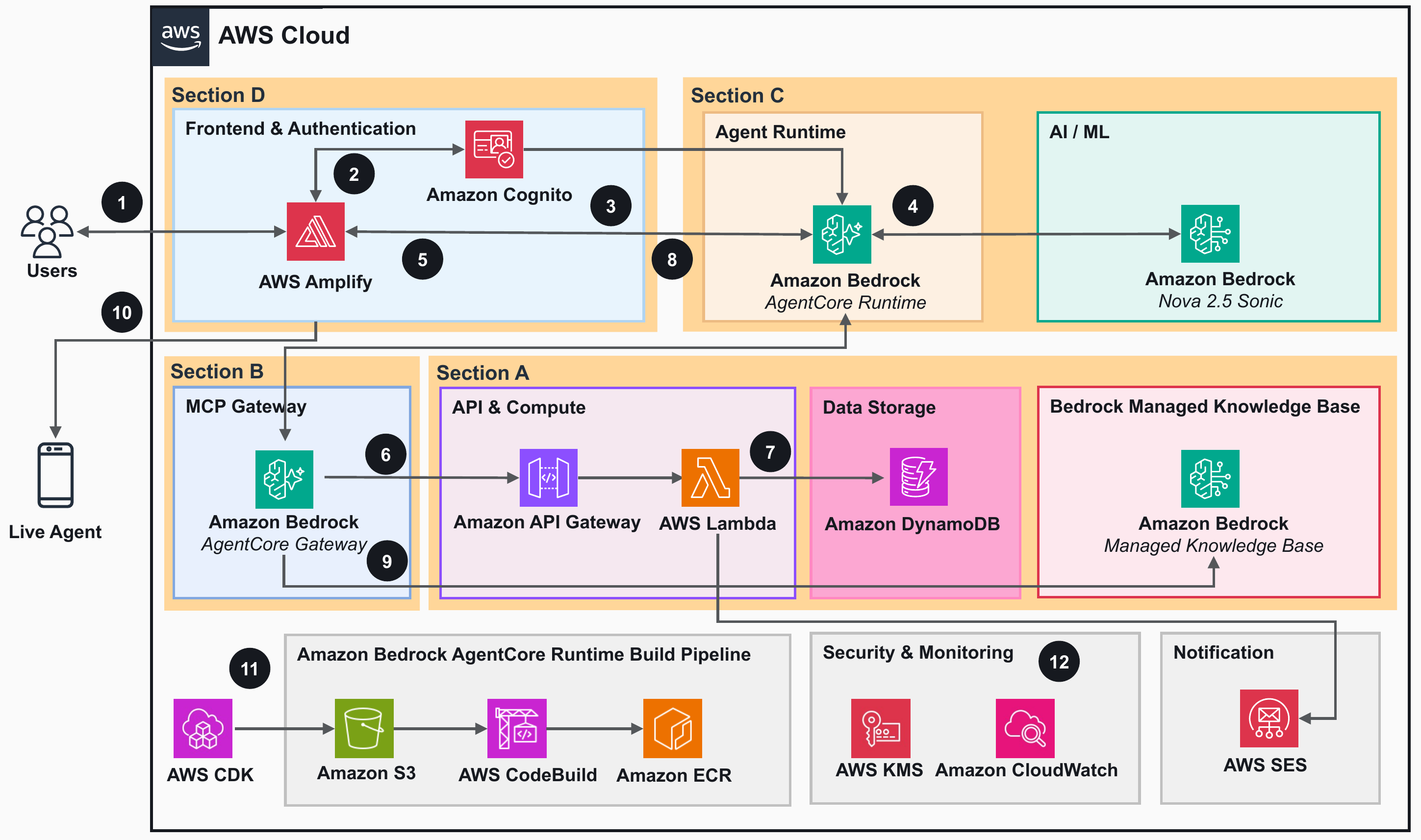
Airlines are increasingly looking to enhance customer experience through technology, and Amazon is stepping up to the plate with its latest offering: a voice travel concierge powered by Amazon Bedrock AgentCore, Amazon Nova Sonic, and Amazon Bedrock Knowledge Bases. This innovative solution allows travelers to interact with their airline apps using natural language, enabling them to change seats, check flight delays, and inquire about policies—all through voice commands. By integrating these advanced tools, Amazon aims to streamline customer service processes and provide a more personalized travel experience.
The Amazon Bedrock AgentCore serves as the backbone of this voice concierge, allowing airlines to build custom conversational agents that can handle a variety of customer inquiries. Coupled with Amazon Nova Sonic, which provides real-time speech recognition capabilities, the system can accurately interpret and respond to passenger requests. The integration of Amazon Bedrock Knowledge Bases ensures that the agent has access to up-to-date information regarding airline policies, flight statuses, and other critical data, making it a powerful tool for both airlines and their customers.
Key facts
| Feature | Detail |
|---|---|
| Product | Amazon Bedrock AgentCore, Nova Sonic, Knowledge Bases |
| Use Case | Voice travel concierge for airline apps |
| Capabilities | Change seats, check delays, ask policy questions |
| Technology | Real-time speech recognition, managed knowledge bases |
| Integration | Connects to airline backends through MCP tools |
| Confirmation Mechanism | Confirms changes before writing to backend |
| Target Users | Airline passengers |
| Launch Date | Announced in October 2023 |
| Market Focus | Airline industry, customer service enhancement |
| Competitive Advantage | Streamlined voice interactions, real-time responses |
Who's involved
Amazon is the primary player behind this new technology, leveraging its extensive cloud computing and AI capabilities to enhance the airline industry. The integration of multiple Amazon services—AgentCore, Nova Sonic, and Knowledge Bases—demonstrates a cohesive strategy to improve customer service. Airlines looking to adopt this technology will benefit from Amazon's robust infrastructure and expertise in machine learning and natural language processing.
Background
The travel industry has been undergoing a significant transformation as companies seek to leverage technology to improve customer experiences. Voice technology, in particular, has gained traction as consumers become more accustomed to interacting with devices through natural language. Prior to this development, many airlines relied on traditional customer service channels, such as phone calls and chatbots, which often fell short in providing timely and accurate responses to passenger inquiries.
Amazon's introduction of a voice travel concierge represents a shift towards more interactive and efficient customer service solutions. By enabling passengers to communicate directly with their airline apps through voice, the technology not only enhances user experience but also reduces the workload on customer service representatives. This move aligns with broader trends in the industry, where automation and AI are increasingly being utilized to streamline operations and improve service delivery.
How to read the numbers
| Benchmark | Score |
|---|---|
| Speech Recognition Accuracy | N/A |
| Response Time | N/A |
| User Satisfaction Rate | N/A |
| Integration Time | N/A |
| Policy Update Frequency | N/A |
While specific numerical benchmarks for the voice concierge have not been disclosed, the emphasis on real-time capabilities suggests a focus on minimizing response times and maximizing accuracy in speech recognition. The effectiveness of the system will ultimately depend on how well it can interpret user requests and provide timely, relevant information.
What you can do with it
- Integrate Voice Features: Airlines can implement the voice concierge into their existing apps to enhance user engagement.
- Improve Customer Service: By automating common inquiries, airlines can free up human agents to handle more complex issues.
- Utilize Real-Time Data: Leverage the managed knowledge bases to provide passengers with the most current information regarding flights and policies.
- Test and Optimize: Continuously monitor user interactions to refine the voice recognition capabilities and improve overall performance.
What we're watching
As airlines begin to adopt this technology, it will be crucial to monitor user feedback and performance metrics. Key questions include how well the voice concierge can handle diverse accents and dialects, as well as its ability to manage complex inquiries that may require nuanced understanding. Additionally, the effectiveness of the integration with existing backend systems will be a significant factor in determining the overall success of this initiative.
Looking ahead, the potential for expansion into other areas of travel and hospitality is significant. As airlines and travel companies explore the capabilities of voice technology, we may see similar solutions emerge in hotels, car rentals, and other sectors of the travel industry. The focus will likely shift towards creating a seamless travel experience that integrates voice interactions across all touchpoints, further enhancing customer satisfaction and operational efficiency. This could lead to a new standard in how travelers interact with service providers, setting the stage for a more connected and responsive travel ecosystem.
Source: AWS Machine Learning · Read original →
Instagram & TikTok: copy the link or quote and paste into a Story, Reel, or caption.
Digest
AI news by email
Curated stories with sources and takeaways. Confirm once — unsubscribe anytime.
Discussion
Comment here after signing in, or share the story to continue the conversation elsewhere.
Instagram & TikTok: copy the link and paste into a Story, Reel, or caption.
Log in or create an account to comment — Google / GitHub / X when those providers are configured.
No comments yet — start the thread.


