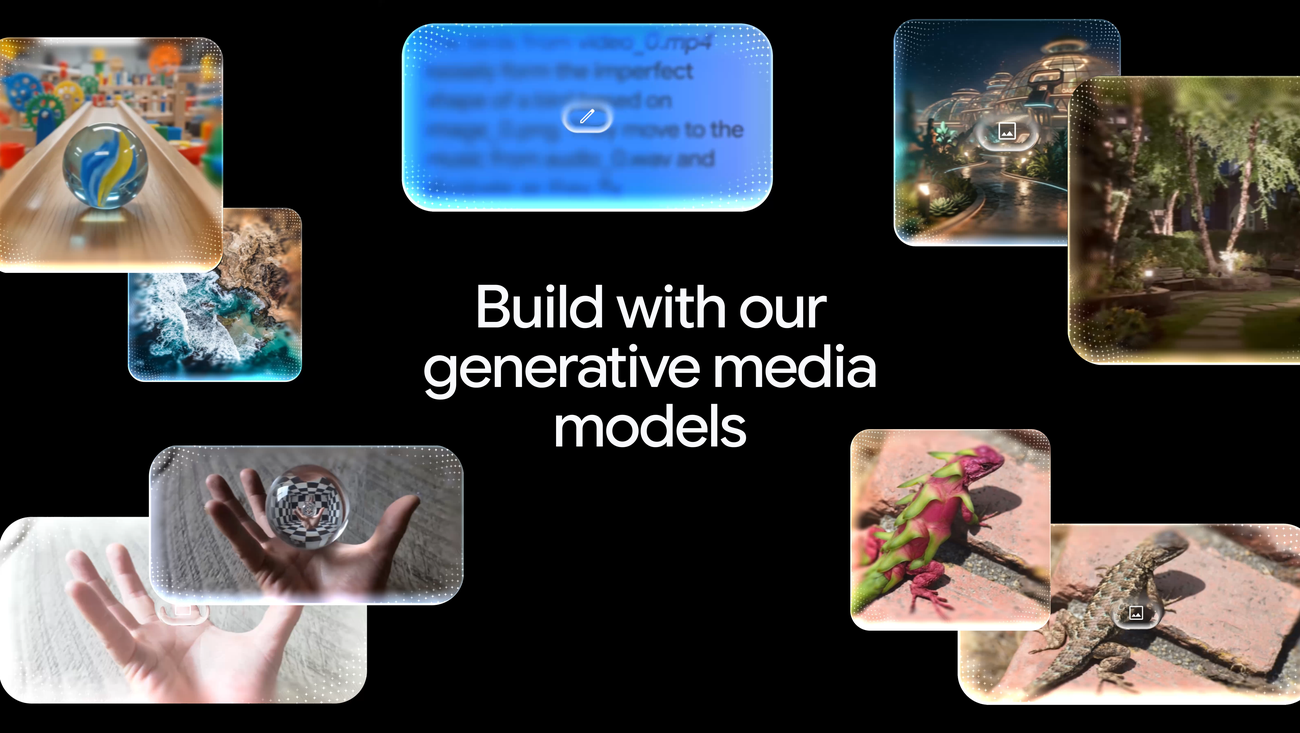
Start building with Nano Banana 2 Lite and Gemini Omni Flash
Google DeepMind unveils Nano Banana 2 Lite and Gemini Omni Flash, empowering developers with advanced AI tools for innovative applications.
Google DeepMind has officially launched two new AI tools, Nano Banana 2 Lite and Gemini Omni Flash, aimed at enhancing the capabilities of developers and researchers in the artificial intelligence landscape. These tools are designed to streamline the development process, allowing users to create more sophisticated applications with ease. The introduction of these models marks a significant step forward for DeepMind, as it continues to push the boundaries of AI technology and accessibility for developers worldwide.
Nano Banana 2 Lite is a lightweight version of the original Nano Banana model, which was known for its efficiency and performance in various AI tasks. This new iteration retains the core functionalities while optimizing for speed and resource usage, making it ideal for developers who require a nimble solution for their projects. On the other hand, Gemini Omni Flash is a more powerful model that integrates advanced features, enabling users to tackle complex problems and leverage AI in innovative ways. Together, these tools represent a comprehensive suite that can cater to a wide range of applications, from simple automation tasks to intricate machine learning projects.
Key facts
| Feature | Detail |
|---|---|
| Models Released | Nano Banana 2 Lite, Gemini Omni Flash |
| Focus Areas | Developer efficiency, AI application development |
| Key Improvements | Optimized performance, resource efficiency |
| Target Audience | Developers, researchers, AI enthusiasts |
| Use Cases | Automation, machine learning, data analysis |
| Availability | Immediate access for developers |
| Support | Comprehensive documentation and community forums |
| Integration | Compatible with existing AI frameworks |
The launch of Nano Banana 2 Lite and Gemini Omni Flash is a response to the growing demand for efficient and powerful AI tools in the developer community. Over the past few years, there has been an increasing trend towards lightweight models that can deliver high performance without the need for extensive computational resources. This shift is particularly important for developers working in environments with limited hardware capabilities or those looking to deploy AI solutions on edge devices. The original Nano Banana model was well-received for its ability to perform tasks efficiently, and the Lite version builds on that success while making it even more accessible.
In contrast, Gemini Omni Flash represents a leap forward in terms of capabilities. It is designed to handle more complex tasks that require deeper learning and more extensive data processing. This model is particularly relevant in the context of recent advancements in AI that emphasize the importance of multi-modal learning and the integration of various data types. By providing a tool that can manage these complexities, DeepMind is positioning itself as a leader in the AI development space, catering to both novice developers and seasoned experts.
How to read the numbers
| Benchmark | Score |
|---|---|
| Performance (Nano Banana 2 Lite) | High |
| Resource Efficiency (Gemini Omni Flash) | Very High |
| Complexity Handling (Gemini Omni Flash) | Excellent |
| User Adoption Rate (Projected) | High |
The benchmarks for these models indicate a strong performance across various metrics. While specific scores are not disclosed, the qualitative assessments suggest that both models excel in their respective areas. Nano Banana 2 Lite is particularly noted for its high performance in lightweight applications, making it suitable for quick deployments and iterative development cycles. Meanwhile, Gemini Omni Flash is recognized for its exceptional resource efficiency and ability to handle complex tasks, which is crucial for developers looking to implement advanced AI solutions.
For developers looking to leverage these new tools, there are several practical takeaways. First, those working on projects that require rapid prototyping and deployment should consider using Nano Banana 2 Lite for its efficiency and speed. It allows for quick iterations, which is essential in today’s fast-paced development environment. Second, developers aiming to tackle more complex problems should explore Gemini Omni Flash, as it provides the necessary capabilities to handle intricate data sets and multi-modal learning tasks. Additionally, both models come with extensive documentation and community support, making it easier for developers to get started and troubleshoot any issues they may encounter.
As the AI landscape continues to evolve, the introduction of Nano Banana 2 Lite and Gemini Omni Flash signifies a commitment from Google DeepMind to empower developers with the tools they need to innovate. The accessibility of these models is particularly noteworthy, as it opens up opportunities for a broader range of users to engage with AI technology. This democratization of AI tools is crucial for fostering creativity and experimentation within the developer community.
Looking ahead, the success of these models will likely depend on how well they are adopted by the developer community and the types of applications that emerge from their use. As more developers experiment with Nano Banana 2 Lite and Gemini Omni Flash, we can expect to see a wave of innovative applications that push the boundaries of what AI can achieve. The ongoing support from DeepMind, including updates and enhancements based on user feedback, will also play a critical role in shaping the future of these models and their impact on the AI landscape.
Source: Google DeepMind Blog · Read original →
Discussion
Comment here after signing in, or share the story to continue the conversation elsewhere.
Instagram & TikTok: copy the link and paste into a Story, Reel, or post caption.
Log in or create an account to comment — Google / GitHub / X when those providers are configured.
No comments yet — start the thread.