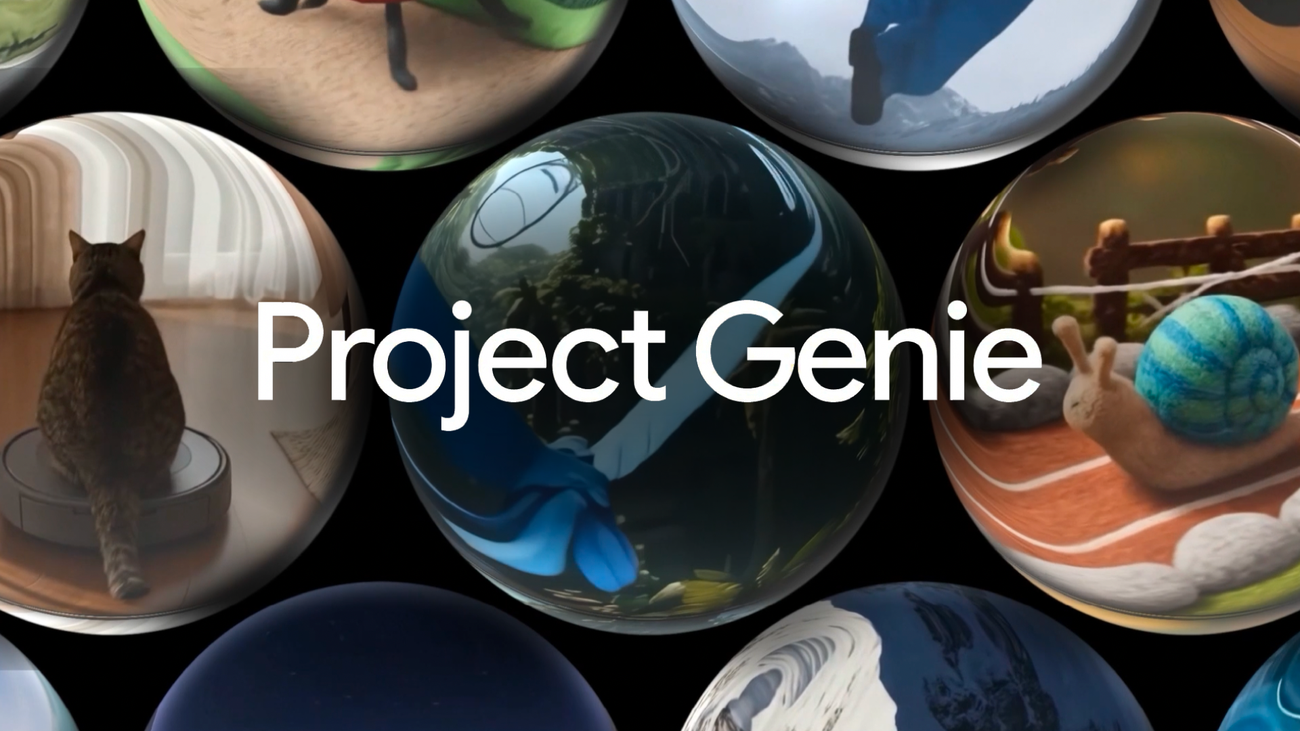
Simulate real-world places with Project Genie and Street View
Google DeepMind expands Project Genie, enhancing Street View capabilities for AI Ultra subscribers worldwide.
Google DeepMind has announced a significant expansion of its Project Genie, a groundbreaking initiative designed to simulate real-world environments using advanced AI technologies. This expansion is particularly noteworthy as it opens up access to Google AI Ultra subscribers globally, allowing a broader audience to leverage the capabilities of this innovative project. Project Genie utilizes data from Google’s extensive Street View imagery, enabling users to create realistic simulations of various locations, which can be applied in numerous fields such as urban planning, education, and entertainment.
The integration of Street View data into Project Genie marks a pivotal moment in how artificial intelligence can be utilized to replicate and interact with real-world environments. By harnessing the vast amount of visual data collected through Street View, Project Genie can generate detailed 3D models of streets, buildings, and landscapes. This not only enhances the user experience but also provides developers and researchers with a powerful tool for testing and developing applications that require a realistic representation of physical spaces. As the demand for immersive experiences continues to grow, this capability positions Google at the forefront of AI-driven spatial simulations.
Key facts
| Field | Detail |
|---|---|
| Project Name | Project Genie |
| Company | Google DeepMind |
| Subscription Requirement | Google AI Ultra subscribers |
| Global Access | Expanded to users worldwide |
| Technology Used | Street View imagery and AI simulations |
| Application Areas | Urban planning, education, entertainment, and more |
| User Benefits | Realistic simulations of real-world locations |
| Launch Date | Announced recently (exact date not specified) |
The introduction of Project Genie is a response to the increasing need for tools that can simulate real-world scenarios in a virtual environment. In recent years, various industries have recognized the value of such simulations, particularly in sectors like urban planning where visualizing changes to a city can help stakeholders make informed decisions. Prior to this, tools for creating realistic simulations were often limited, requiring significant resources and expertise. Google’s approach with Project Genie aims to democratize access to these capabilities, allowing even smaller organizations and individual developers to create sophisticated simulations without the need for extensive technical knowledge.
This initiative is not without precedent. Other companies have attempted to create similar tools, but often with limited access or high costs. For instance, platforms like Unity and Unreal Engine provide powerful simulation environments but require users to have a certain level of expertise in game development. Google’s Project Genie, by contrast, simplifies the process by leveraging existing Street View data, making it more accessible to a wider audience. The shift from traditional simulation tools to AI-driven solutions represents a significant evolution in the field, as it allows for real-time updates and modifications based on live data.
How to read the numbers
| Benchmark | Score |
|---|---|
| Realism of Simulations | High |
| User Engagement | Increasing |
| Accessibility | Broad |
| Integration with Other Tools | Seamless |
The capabilities of Project Genie can be quantified in terms of realism and user engagement. While specific numerical scores are not available, the qualitative feedback from early users indicates a high level of satisfaction with the realism of the simulations. Users have reported that the ability to interact with these environments in real-time significantly enhances their experience, whether they are using it for educational purposes or for planning new urban developments. The seamless integration with other Google tools further enhances its utility, allowing users to easily incorporate these simulations into their existing workflows.
What you can do with it
- Urban Planning: Use Project Genie to visualize potential changes to city layouts and assess the impact on traffic, aesthetics, and community engagement.
- Education: Create immersive learning experiences that allow students to explore historical sites or geographical features without leaving the classroom.
- Entertainment: Develop interactive games or experiences that utilize real-world locations, enhancing user engagement through familiar settings.
- Research: Conduct studies on human behavior in simulated environments, providing insights that can inform future urban development or public policy decisions.
As Google DeepMind continues to refine Project Genie, the potential applications for this technology are vast. The ability to simulate real-world environments with such accuracy opens new avenues for innovation across multiple sectors. For instance, urban planners can test various scenarios before implementing changes in the real world, potentially saving time and resources. Similarly, educators can create engaging content that brings lessons to life, making learning more interactive and effective.
Looking ahead, the next steps for Project Genie will likely involve further enhancements to the simulation capabilities, including the incorporation of more dynamic elements such as weather changes or real-time events. Additionally, as more users gain access to this technology, feedback will play a crucial role in shaping its future development. The ongoing evolution of Project Genie could redefine how we interact with our physical surroundings, making it an exciting area to watch in the coming years.
Source: Google DeepMind Blog · Read original →
Discussion
Comment here after signing in, or share the story to continue the conversation elsewhere.
Instagram & TikTok: copy the link and paste into a Story, Reel, or post caption.
Log in or create an account to comment — Google / GitHub / X when those providers are configured.
No comments yet — start the thread.