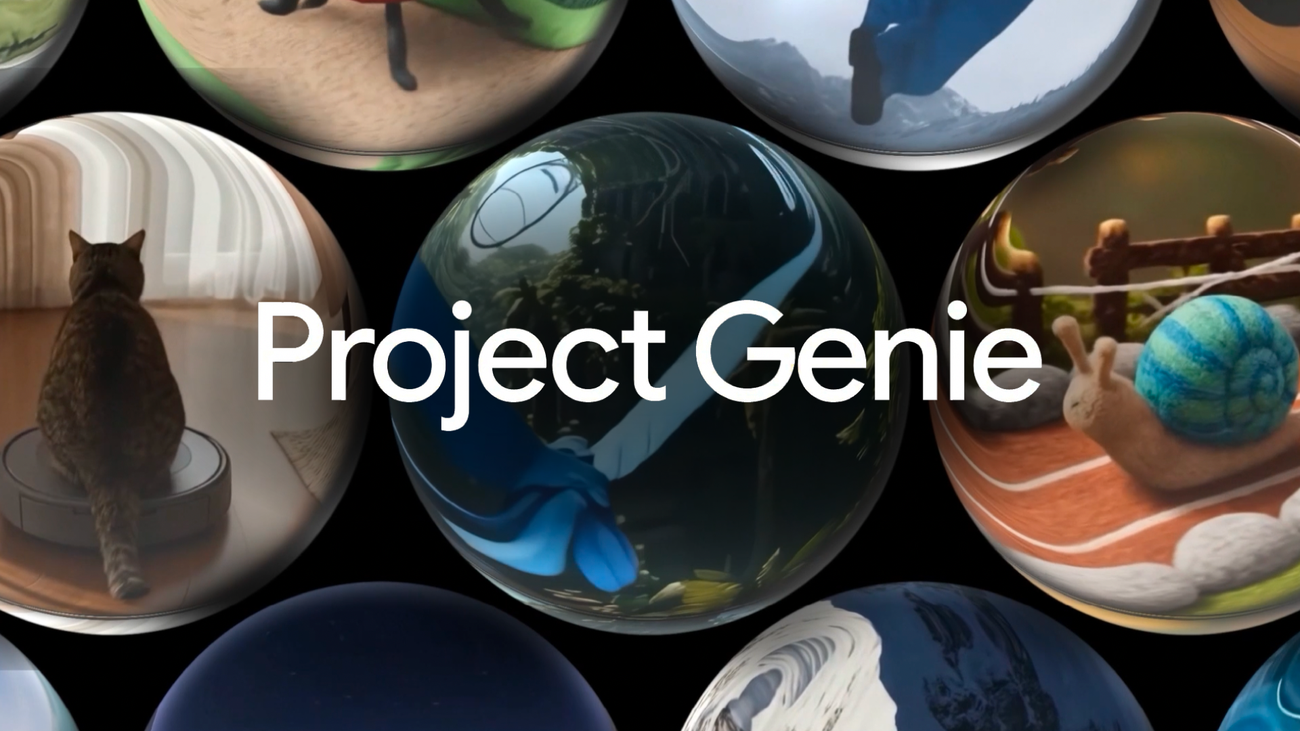
Simulate real-world places with Project Genie and Street View
Google AI Ultra subscribers can now create realistic simulations of real-world places with Project Genie and Street View.
Google has announced the launch of Project Genie, a groundbreaking tool that allows AI Ultra subscribers to create hyper-realistic simulations of real-world locations using data from Street View. This innovative project leverages advanced machine learning techniques to generate detailed 3D environments, enabling users to immerse themselves in lifelike settings for various applications, from gaming to urban planning. By integrating the extensive Street View database, Project Genie offers a unique opportunity for developers and creators to design interactive experiences that closely mimic real-life scenarios.
The introduction of Project Genie marks a significant advancement in the capabilities of AI-generated content. Users can now manipulate and customize these simulations, tailoring them to their specific needs. This level of detail and interactivity opens up new avenues for industries such as architecture, tourism, and education, where realistic environments can enhance user engagement and understanding. Google’s commitment to pushing the boundaries of AI technology is evident in this latest offering, which combines the vastness of its Street View imagery with cutting-edge simulation techniques.
Key facts
| Field | Detail |
|---|---|
| Product Name | Project Genie |
| Availability | Google AI Ultra subscribers |
| Technology Used | Machine Learning, 3D Simulation |
| Application Areas | Gaming, Urban Planning, Education |
| Data Source | Google Street View |
| User Interaction | Customizable and interactive simulations |
As the demand for immersive digital experiences grows, tools like Project Genie become increasingly relevant. The ability to simulate real-world environments can transform how users interact with digital content. For instance, in the gaming industry, developers can create expansive worlds that feel authentic, enhancing player immersion. Similarly, urban planners can visualize projects within the context of existing neighborhoods, allowing for better decision-making and community engagement. The potential applications are vast, and as more users adopt AI Ultra, the creative possibilities will only expand.
This development is part of a broader trend in AI where companies are focusing on creating tools that enhance user experience through realistic simulations. Similar initiatives have been seen in the realm of virtual reality and augmented reality, where companies like Meta and Unity have been pushing the envelope to create more engaging environments. By allowing users to create their own simulations, Google is not only fostering creativity but also encouraging collaboration among users who can share and build upon each other's work.
Looking ahead, the success of Project Genie will depend on how effectively Google can integrate user feedback into future iterations of the tool. As more subscribers begin to experiment with the platform, the company will likely gather valuable insights that could shape the next phases of development. Additionally, as the technology evolves, there may be opportunities for partnerships with other industries, further expanding the impact of this innovative simulation tool. The potential for Project Genie to redefine how we interact with digital spaces is immense, and its trajectory will be closely watched by both users and competitors alike.
Source: Google DeepMind Blog · Read original →
Discussion
Comment here after signing in, or share the story to continue the conversation elsewhere.
Instagram & TikTok: copy the link and paste into a Story, Reel, or post caption.
Log in or create an account to comment — Google / GitHub / X when those providers are configured.
No comments yet — start the thread.
