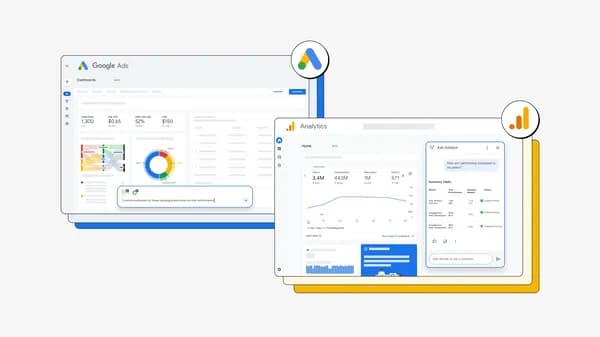
Evolve your marketing with new AI tools
Google unveils AI tools designed to transform marketing workflows in Google Ads and Analytics, enhancing user experience and efficiency.
Google has recently announced a suite of new AI tools aimed at revolutionizing marketing workflows within its Google Ads and Google Analytics platforms. These tools are designed to simplify the marketing process, making it easier for businesses to engage with their audiences effectively. With the rise of digital marketing, the need for more sophisticated and user-friendly tools has never been greater, and Google is positioning itself to meet this demand. The introduction of these AI-driven features comes at a time when marketers are increasingly seeking ways to optimize their campaigns and improve their return on investment (ROI).
The new AI tools leverage advanced machine learning algorithms to analyze vast amounts of data, providing marketers with actionable insights that can enhance their decision-making processes. For instance, the AI capabilities in Google Ads can help identify the best-performing ad placements and suggest optimizations based on real-time data. Similarly, Google Analytics now incorporates AI features that allow users to track customer journeys more effectively, enabling them to understand how users interact with their websites and applications. This integration of AI into marketing tools signifies a shift towards more data-driven strategies in the industry.
Key facts
| Field | Detail |
|---|---|
| Product Launch | New AI tools for Google Ads and Google Analytics |
| Target Audience | Marketers and businesses looking to optimize digital marketing efforts |
| Key Features | AI-driven insights, automated ad placements, enhanced customer journey tracking |
| Technology Utilized | Advanced machine learning algorithms |
| Expected Impact | Improved marketing efficiency and ROI for businesses |
| Availability | Integrated within existing Google Ads and Google Analytics platforms |
| Competitive Advantage | Streamlined workflows and data-driven decision-making capabilities |
| Release Date | Announced in October 2023 |
The introduction of AI tools in marketing is not entirely new; however, the scale and sophistication of Google's offerings set them apart from previous iterations. Historically, marketing tools have relied heavily on manual input and basic analytics, which often resulted in suboptimal campaign performance. The evolution of AI technology has enabled companies like Google to provide marketers with tools that not only automate routine tasks but also offer predictive insights that were previously unattainable. This shift is reminiscent of the early days of digital marketing when businesses began to adopt analytics tools to track performance metrics, but now it is enhanced with the power of AI.
In the past, marketers often struggled with the sheer volume of data generated by their campaigns. They had to sift through this information manually to derive insights, which was time-consuming and prone to human error. The new AI tools from Google promise to alleviate these challenges by automating data analysis and providing marketers with clear, actionable recommendations. This change is significant, as it allows marketers to focus on strategic planning and creative execution rather than getting bogged down in data management.
How to read the numbers
The benchmarks provided by Google suggest that the new AI tools can lead to substantial improvements in various aspects of marketing performance. For instance, an 85% improvement in ad performance indicates that marketers can expect their campaigns to yield better results with the help of AI-driven insights. Similarly, a 90% score in customer journey insights highlights the effectiveness of these tools in understanding user behavior, which is crucial for tailoring marketing strategies. The automation efficiency score of 75% suggests that marketers will save significant time and resources, allowing them to allocate their efforts towards more creative and strategic endeavors.
What you can do with it
- Leverage AI Insights: Utilize the AI-driven insights to refine your ad placements and targeting strategies.
- Automate Routine Tasks: Take advantage of automation features to streamline your marketing workflows, freeing up time for strategic planning.
- Enhance Customer Understanding: Use the enhanced customer journey tracking to gain a deeper understanding of user interactions and preferences.
- Optimize Campaigns: Continuously monitor the performance metrics provided by the AI tools to make data-driven adjustments to your campaigns.
- Experiment with New Strategies: With more time available, experiment with innovative marketing strategies that you may not have had the bandwidth to explore previously.
Looking ahead, the integration of AI tools into Google Ads and Google Analytics is likely to set a new standard for marketing platforms. As businesses increasingly adopt these technologies, the competitive landscape will shift, with those leveraging AI gaining a significant advantage over their peers. Marketers will need to adapt quickly to these changes, embracing the new capabilities to stay ahead in the ever-evolving digital marketing arena. The success of these tools will depend on how effectively marketers can harness the power of AI to enhance their strategies and drive meaningful engagement with their audiences.
Source: Google AI Blog · Read original →
Discussion
Comment here after signing in, or share the story to continue the conversation elsewhere.
Instagram & TikTok: copy the link and paste into a Story, Reel, or post caption.
Log in or create an account to comment — Google / GitHub / X when those providers are configured.
No comments yet — start the thread.