Back to The Future: Evaluating AI Agents on Predicting Future Events
New research reveals varying accuracy in AI agents' predictions of future events, impacting industries reliant on forecasting.
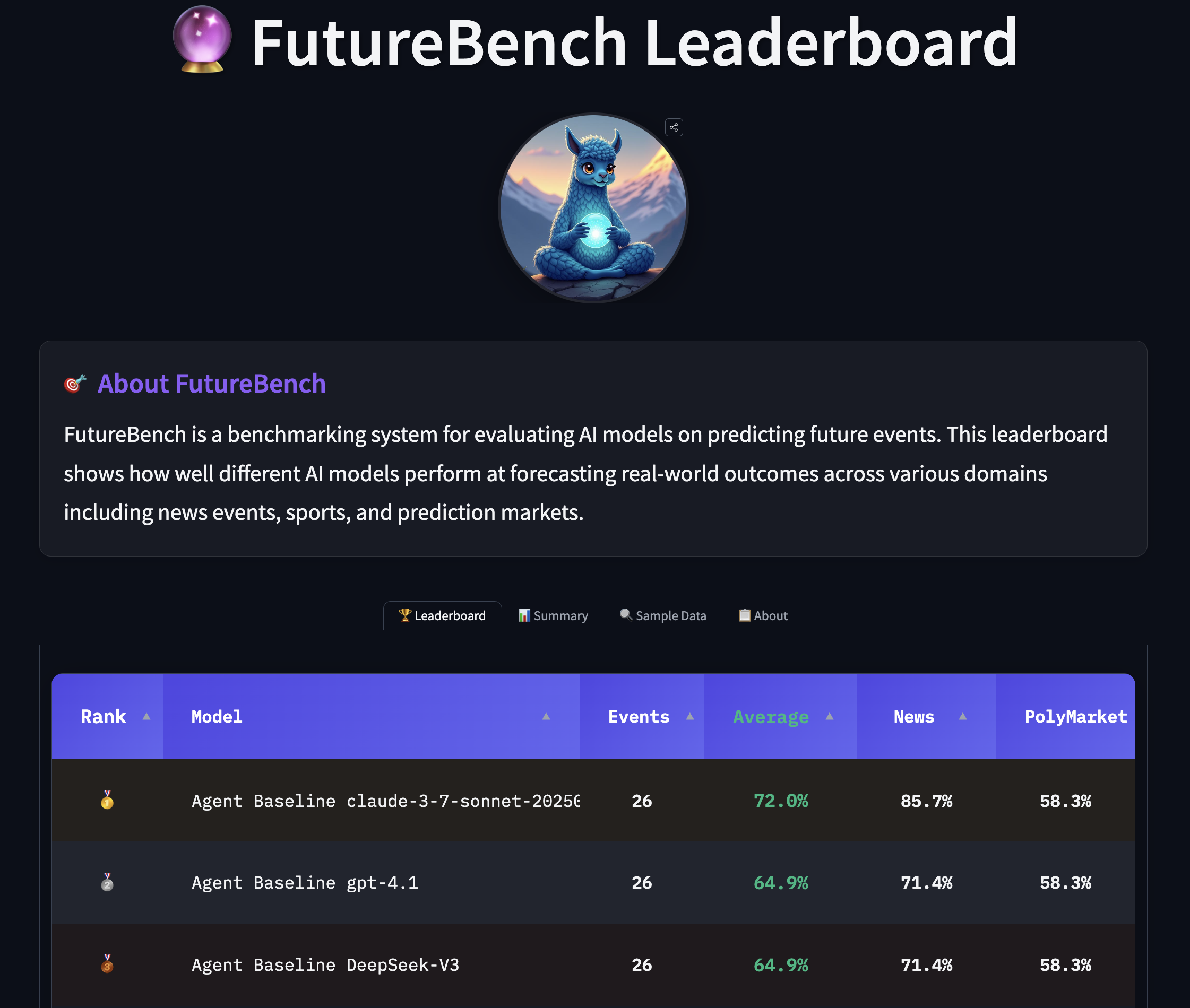
A recent study published by Hugging Face has shed light on the predictive capabilities of various AI agents when it comes to forecasting future events. The research meticulously evaluates multiple AI models, analyzing their performance across a range of scenarios. The findings indicate significant discrepancies in prediction accuracy, raising questions about the reliability of these models in real-world applications. With industries increasingly relying on AI for decision-making, understanding these variances is crucial for stakeholders and developers alike.
The study employed key metrics such as precision, recall, and F1 scores to assess the forecasting abilities of the AI agents. Precision measures the accuracy of the positive predictions made by the models, while recall evaluates the models' ability to identify all relevant instances. The F1 score, which balances precision and recall, provides a comprehensive view of each model's performance. This rigorous evaluation framework allows for a nuanced understanding of how well these AI agents can predict future events, which is essential for their deployment in critical sectors like finance, healthcare, and logistics.
Key facts
| Field | Detail |
|---|---|
| Study Focus | Evaluating AI agents' forecasting abilities |
| Key Metrics | Precision, Recall, F1 Scores |
| Findings | Significant variance in prediction accuracy |
| Implications | Affects decision-making in various industries |
| Research Source | Hugging Face Blog |
The implications of this research extend far beyond academic interest. In industries where forecasting is pivotal, such as finance and supply chain management, the accuracy of AI predictions can directly impact profitability and operational efficiency. For instance, a financial institution relying on AI for market predictions may face substantial losses if the model's accuracy is not adequately assessed. Similarly, businesses that depend on AI for inventory management could find themselves overstocked or understocked based on flawed predictions. Therefore, the study's findings serve as a critical reminder for organizations to rigorously evaluate the AI models they choose to implement.
As AI technology continues to advance, the demand for reliable forecasting tools is only expected to grow. Companies are increasingly integrating AI into their decision-making processes, necessitating a deeper understanding of the models' predictive capabilities. This study not only highlights the current state of AI forecasting but also sets the stage for future research aimed at improving these models. Upcoming advancements may include enhanced algorithms that better account for the complexities of real-world events, ultimately leading to more accurate predictions and better-informed decisions across various sectors. The journey toward reliable AI forecasting is ongoing, and stakeholders must remain vigilant in evaluating the tools they deploy.
Source: Hugging Face Blog · Read original →
Discussion
Comment here after signing in, or share the story to continue the conversation elsewhere.
Instagram & TikTok: copy the link and paste into a Story, Reel, or post caption.
Log in or create an account to comment — Google / GitHub / X when those providers are configured.
No comments yet — start the thread.