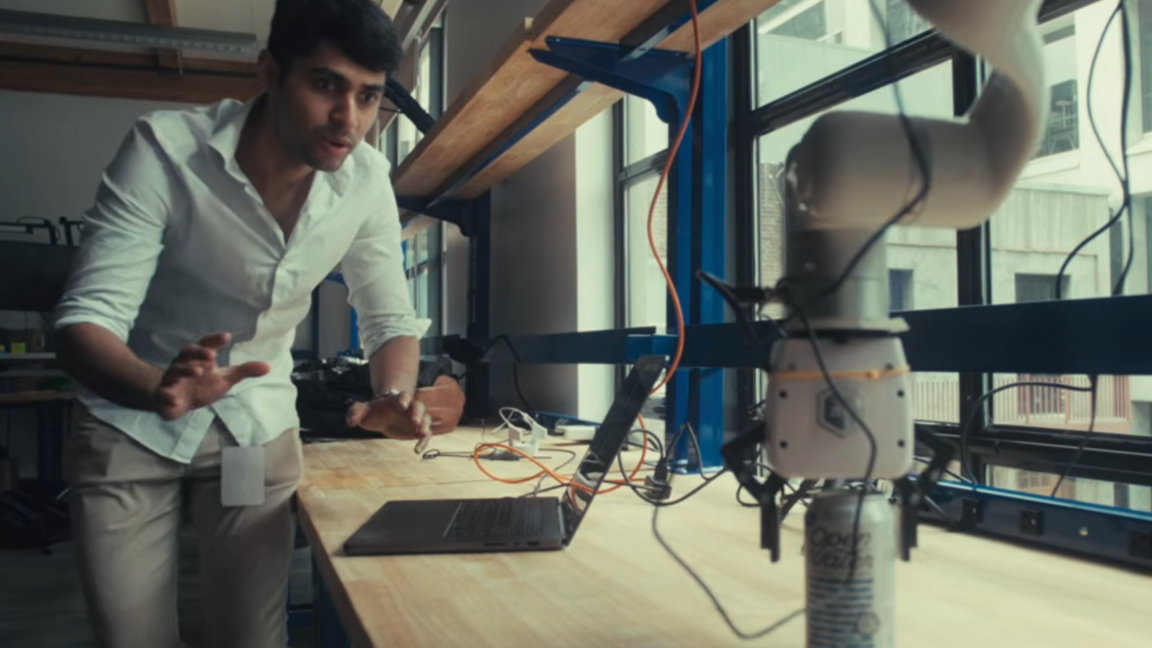
Anthropic's new hardware standard lets AI agents control the physical world
Anthropic introduces a groundbreaking hardware standard to enhance AI agents' ability to interact with the physical world.
Anthropic has unveiled a new hardware standard designed to facilitate communication between AI agents and physical devices. This initiative aims to create a standardized driver interface that allows various devices to seamlessly interact with AI, thereby enabling a more integrated and responsive environment. By establishing a common framework, Anthropic hopes to bridge the gap between digital intelligence and the physical world, allowing AI systems to control devices ranging from home appliances to industrial machinery. This move is expected to significantly enhance the capabilities of AI agents, making them more effective in real-world applications.
The introduction of this hardware standard comes at a time when the demand for AI-driven solutions is rapidly increasing across multiple sectors. Industries such as manufacturing, healthcare, and smart home technology are increasingly looking for ways to incorporate AI into their operations. Anthropic's initiative is particularly timely, as it addresses the challenges posed by the lack of interoperability among devices and AI systems. By providing a standardized interface, Anthropic aims to simplify the integration process, allowing developers to create more sophisticated AI applications that can control and communicate with a wide range of hardware.
Key facts
| Field | Detail |
|---|---|
| Company | Anthropic |
| Initiative | New hardware standard |
| Purpose | Standardized driver interface for AI and devices |
| Target | AI agents controlling physical devices |
| Industries affected | Manufacturing, healthcare, smart home technology |
| Expected outcome | Enhanced AI capabilities in real-world applications |
| Interoperability | Improved communication between devices and AI |
| Development stage | Recently announced |
The concept of standardizing communication between AI and physical devices is not entirely new. Previous efforts have been made in the realm of IoT (Internet of Things), where various protocols have been developed to enable devices to communicate with each other. However, these protocols often lack the robustness and flexibility required for more advanced AI applications. Anthropic's approach aims to overcome these limitations by providing a unified framework that can support a wide range of devices and applications. This is a significant shift from previous generations of AI technology, which often relied on proprietary systems that limited their ability to interact with other devices.
In recent years, the rise of AI has led to a surge in interest in the potential for intelligent systems to control physical environments. Companies like Google and Amazon have made strides in this area with their smart home products, but the lack of a standardized interface has hindered broader adoption. Anthropic's new hardware standard could pave the way for a more cohesive ecosystem where AI agents can not only control individual devices but also coordinate actions across multiple devices to achieve complex tasks. This capability could revolutionize industries by enabling automation and efficiency that were previously unattainable.
How to read the numbers
| Benchmark | Score |
|---|---|
| Interoperability | High potential |
| Device compatibility | Wide range expected |
| Industry adoption timeline | Short to medium term |
| AI control efficiency | Anticipated increase |
| User experience | Expected improvement |
The introduction of a standardized driver interface is likely to have profound implications for developers and businesses looking to leverage AI in their operations. For instance, manufacturers can expect to see a reduction in the time and resources required to integrate AI into their production lines. By utilizing a common framework, they can streamline the development process and reduce the complexity associated with integrating disparate systems. This could lead to faster deployment of AI solutions, ultimately resulting in cost savings and improved productivity.
Moreover, the potential for enhanced interoperability means that businesses can more easily adopt AI technologies without being locked into specific vendors or platforms. This flexibility is crucial in a rapidly evolving technological landscape, where the ability to pivot and adapt to new advancements can make or break a company's competitive edge. As AI continues to evolve, having a standardized approach will enable organizations to stay ahead of the curve and capitalize on new opportunities as they arise.
What you can do with it
- Explore integration options: Businesses should assess their current systems and identify opportunities for integrating AI using the new standard.
- Stay informed: Keep up with developments from Anthropic and other companies working on similar initiatives to understand the evolving landscape.
- Invest in training: Equip teams with the skills needed to work with the new hardware standard, ensuring they can effectively implement AI solutions.
- Pilot projects: Consider launching pilot projects that utilize the standardized interface to test its capabilities and benefits in real-world scenarios.
- Collaborate with developers: Engage with software developers to create applications that leverage the new standard, enhancing functionality and user experience.
Looking ahead, the success of Anthropic's hardware standard will largely depend on industry adoption and the willingness of manufacturers to embrace this new approach. As more companies recognize the benefits of standardized communication between AI and devices, we may see a shift towards more integrated and intelligent systems across various sectors. The potential for AI to control physical environments is vast, and Anthropic's initiative could serve as a catalyst for innovation, driving the next wave of advancements in AI technology and its applications in the real world.
Source: Ars Technica - AI · Read original →
Discussion
Comment here after signing in, or share the story to continue the conversation elsewhere.
Instagram & TikTok: copy the link and paste into a Story, Reel, or post caption.
Log in or create an account to comment — Google / GitHub / X when those providers are configured.
No comments yet — start the thread.