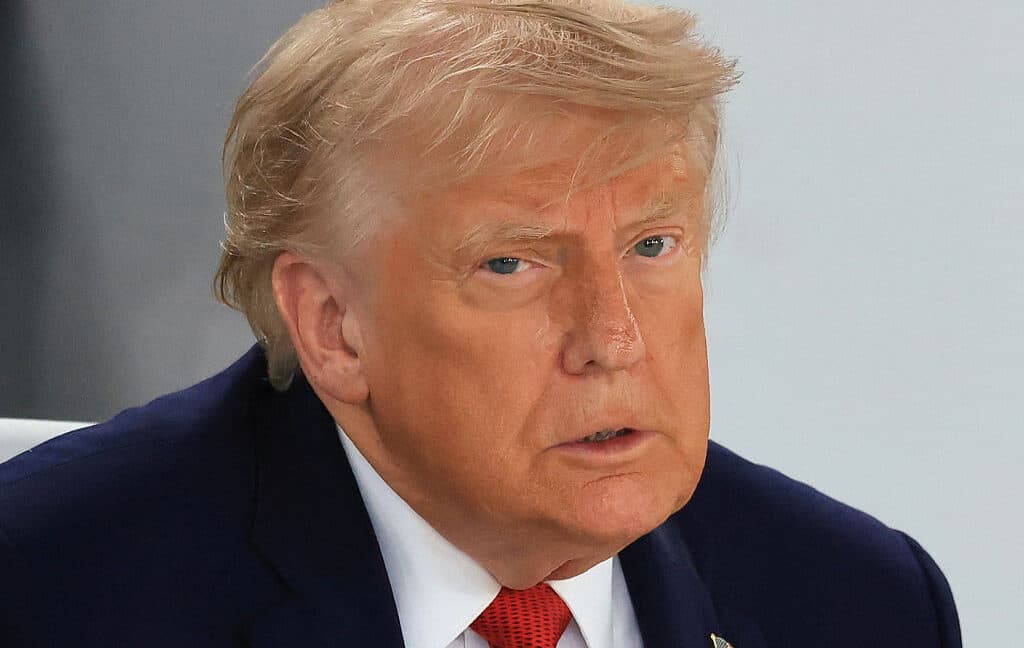
AI industry says Trump plans to tax chips in the “single dumbest way imaginable”
The AI industry is baffled by Trump's proposed tax on data centers, calling it a misguided approach to boost the tech sector.
The AI industry is currently grappling with a controversial proposal from former President Donald Trump, who has suggested implementing a tax on data centers as a means to secure the United States' position in the global AI race. This proposal has sparked significant backlash from various stakeholders within the tech community, who argue that such a tax would be detrimental to innovation and growth in the AI sector. The confusion stems from the belief that taxing the very infrastructure that supports AI development could stifle progress rather than promote it.
Trump's plan appears to be rooted in the idea that by taxing data centers, which are critical for hosting AI models and processing vast amounts of data, the government could generate revenue that could be reinvested into AI research and development. However, many experts in the field have labeled this approach as misguided, arguing that it fails to address the complexities of the AI landscape and could lead to unintended consequences that hinder technological advancement. The proposal has ignited a debate about the best strategies for fostering innovation in AI while ensuring that the U.S. remains competitive on the global stage.
Key facts
| Field | Detail |
|---|---|
| Proposal Origin | Suggested by former President Donald Trump |
| Target of Tax | Data centers, which are essential for AI development |
| Industry Reaction | Widespread confusion and criticism from tech stakeholders |
| Potential Impact | Concerns that the tax could stifle innovation and growth in the AI sector |
| Government Rationale | Intended to generate revenue for reinvestment in AI research and development |
| Current AI Landscape | Highly competitive, with significant investments from both private and public sectors |
| Alternative Solutions | Calls for more supportive policies rather than punitive measures |
| Future Implications | Uncertainty about how this tax could affect the U.S.'s position in the global AI race |
The backdrop of this proposal is a rapidly evolving AI landscape, where competition is fierce not only among tech giants but also between nations. Countries like China and the European Union are heavily investing in AI capabilities, and there is a growing concern that the U.S. may fall behind if it does not adopt a more proactive stance. Historically, the U.S. has led in AI innovation, thanks in part to a favorable regulatory environment and substantial private investment. However, as the global race intensifies, the need for strategic policies that support rather than hinder growth has become increasingly apparent.
Critics of the proposed tax argue that it could have a chilling effect on investment in data centers, which are already facing challenges related to energy consumption and environmental impact. By imposing a tax on these facilities, the government risks discouraging companies from expanding their data center operations, which are crucial for training AI models and processing large datasets. This could ultimately lead to a slowdown in AI advancements and a reduction in the U.S.'s competitive edge in the global market.
How to read the numbers
| Benchmark | Score |
|---|---|
| AI Investment Growth | N/A |
| Data Center Expansion | N/A |
| Global AI Competitiveness | N/A |
| Tax Revenue Impact | N/A |
While specific numeric data regarding the potential impact of the tax is not available, the implications of such a policy could be significant. The AI sector has seen exponential growth in recent years, with investments pouring in from venture capitalists and large tech companies alike. The introduction of a tax on data centers could alter the financial landscape, making it less attractive for investors and potentially leading to a decrease in the pace of innovation.
What you can do with it
- Stay informed about developments in AI policy and regulations that could affect your business.
- Advocate for supportive policies that promote innovation rather than punitive measures.
- Engage with industry groups to voice concerns about the impact of proposed taxes on data centers.
- Explore alternative funding and investment strategies that could mitigate the effects of potential tax burdens.
As the debate over Trump's proposed tax on data centers continues, the tech industry is left to ponder the long-term implications of such a policy. With the global AI race heating up, the need for thoughtful and strategic approaches to fostering innovation has never been more critical. The outcome of this proposal could set a precedent for how the U.S. government interacts with the tech sector, shaping the future of AI development for years to come.
Source: Ars Technica - AI · Read original →
Discussion
Comment here after signing in, or share the story to continue the conversation elsewhere.
Instagram & TikTok: copy the link and paste into a Story, Reel, or post caption.
Log in or create an account to comment — Google / GitHub / X when those providers are configured.
No comments yet — start the thread.