A new way to express yourself: Gemini can now create music
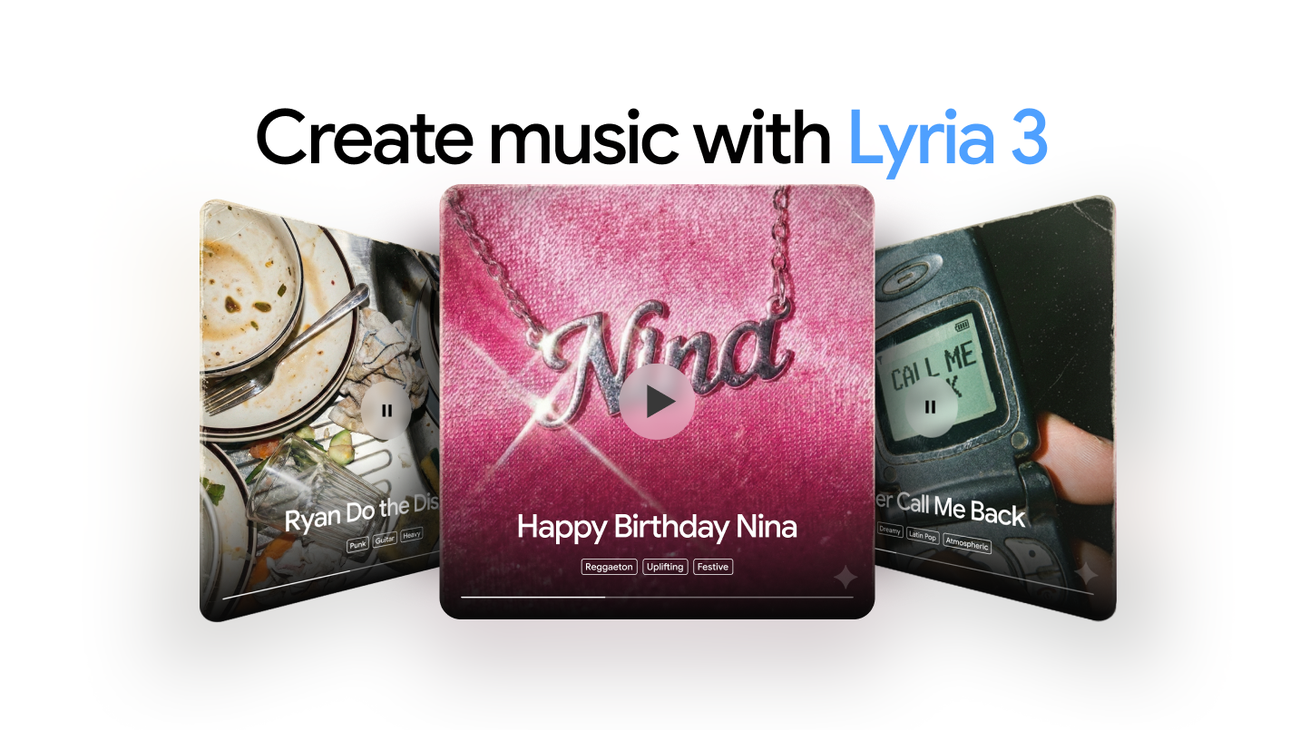
Gemini's Lyria 3 empowers users to create unique music effortlessly from text or images in just 30 seconds.
Google DeepMind has unveiled an exciting new feature in its Gemini app, named Lyria 3, which allows users to create music effortlessly from text or images. This innovative tool is designed to democratize music production, enabling anyone, regardless of their musical background, to generate 30-second tracks with ease. By leveraging advanced AI algorithms, Lyria 3 transforms user inputs into unique musical compositions, thus enhancing creative expression and accessibility in the realm of music creation.
The launch of Lyria 3 marks a significant step forward for Google DeepMind in the AI music generation space. With this tool, users can simply input text descriptions or upload images, and the app will interpret these inputs to produce a corresponding musical piece. This capability not only simplifies the music creation process but also opens up new avenues for artistic expression, allowing users to experiment with sound in ways that were previously limited to those with formal training in music composition.
Key facts
| Field | Detail |
|---|---|
| Feature Name | Lyria 3 |
| Music Creation Method | Text or image input |
| Track Length | 30 seconds |
| Target Audience | General public, including non-musicians |
| Purpose | Enhance creative expression |
| Launch Date | Recently launched |
The introduction of Lyria 3 is part of a broader trend in the AI industry, where tools designed for creative tasks are becoming increasingly sophisticated and user-friendly. Similar to how platforms like OpenAI's DALL-E have transformed visual art creation by allowing users to generate images from text prompts, Lyria 3 aims to do the same for music. This shift is indicative of a growing recognition that creativity can be augmented by AI, making artistic endeavors more accessible to a wider audience.
As AI continues to evolve, the implications for music production are profound. Traditional barriers to entry, such as the need for extensive knowledge of music theory or access to expensive software, are being dismantled. Lyria 3 not only empowers users to create music but also encourages collaboration and experimentation, as individuals can share their creations and inspire others. This could lead to a new wave of musical innovation, where diverse voices contribute to a richer tapestry of sound.
Looking ahead, the success of Lyria 3 may prompt further developments in AI-driven creative tools. As users begin to explore the possibilities of generating music from various inputs, it will be interesting to see how this feature evolves. Future updates could enhance the complexity of the compositions produced or introduce new ways for users to interact with the app. The potential for integration with other platforms and tools could also expand, allowing for a more seamless creative experience across different media.
Source: Google DeepMind Blog · Read original →
Discussion
Comment here after signing in, or share the story to continue the conversation elsewhere.
Instagram & TikTok: copy the link and paste into a Story, Reel, or post caption.
Log in or create an account to comment — Google / GitHub / X when those providers are configured.
No comments yet — start the thread.